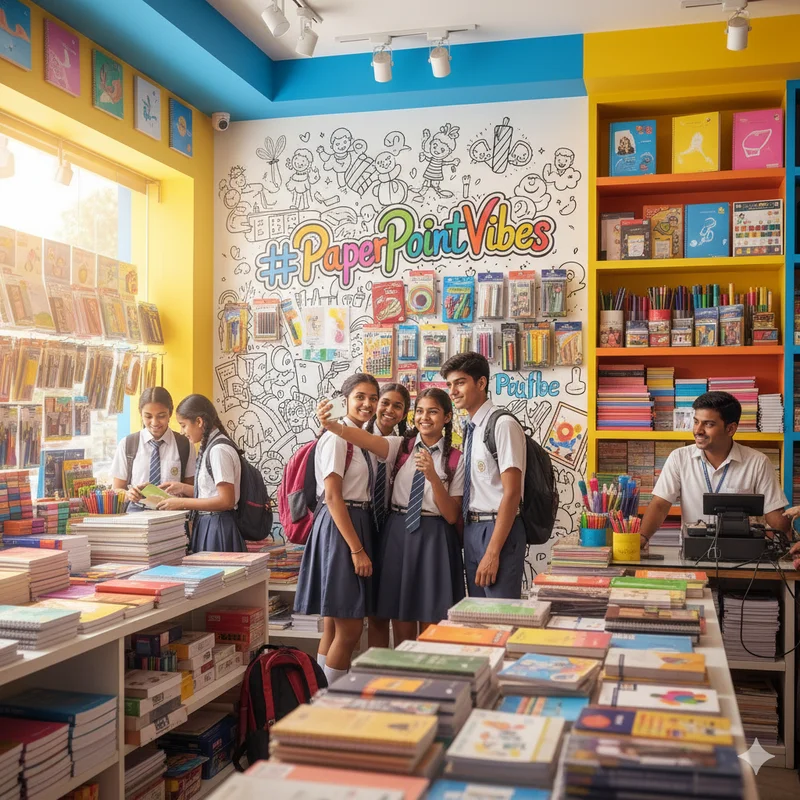
Introduction: The Pencil That Started a Movement
Stationery will always hold a special place in the heart of every student—colorful pens, notebooks, and other accessories are not merely supplies; they are the basis for expression. What happens when a tiny stationery business takes this everyday essential a step further and begins a wave of trend?
This is the mammoth story of PaperPoint, a tiny stationery store in Indore, which became a viral sensation among school and college students. Through clever community engagement, challenges, and their digital presence, PaperPoint went from a quiet corner shop to a bustling brand loved by students.
Let's take a look at how a traditional stationery business used creativity, and good ole local digital tools—Google My Business and LocalShouts—to capture the hearts—and hashtags—of a city.
Chapter 1: The Humble Beginnings
When PaperPoint opened in 2018, it looked like any other small stationery shop. Located near a cluster of schools and coaching centers, its main customers were students who came in for notebooks, pencils, and art supplies.
For the first few years, business was steady but limited. The shop faced tough competition from larger stores and online platforms that offered discounts and variety.
Owner Meena Sharma, a former teacher, realized that to survive, she needed to think beyond selling products. She needed to build connections.
“I noticed that students didn’t just come for stationery—they came to find something that expressed who they were,” Meena recalls.
That insight became the foundation of her marketing journey.
Chapter 2: The Idea—Make Stationery Fun Again
One day, Meena’s teenage daughter suggested creating a “fun corner” in the shop where students could try quirky pens and customized notebooks. To make it even more engaging, she encouraged Meena to post these ideas online.
That’s how the campaign #MyPaperPointStyle was born.
They started a small Instagram page and encouraged customers to share photos of their favorite stationery items with the hashtag. Students began posting selfies with colorful notebooks, cute pens, and creative doodles.
Within a month, the hashtag had over 500 posts—and PaperPoint started getting attention beyond its regular customers.
Chapter 3: Using Humor and Relatability Online
The real turning point came when PaperPoint began posting relatable, funny memes about student life.
Examples included:
- “When your pen disappears right before the exam 🫠”
- “That one friend who borrows your ruler and never returns it 😤”
These light-hearted posts connected deeply with students, turning PaperPoint’s Instagram into a space where school humor thrived.
Each post was tagged with #PaperPointVibes, and the brand became a name that students talked about, not just bought from.
Chapter 4: Smart Use of Google My Business and LocalShouts
While online sales were growing for PaperPoint, offline sales remained and will always be the core of their business, so digital discovery was extremely valuable. They took the initiative to optimize their Google My Business listing by including:
- Up-to-date address and school hours
- Bright, colorful photos of their displays
- Posts about student competitions and new products
They further purchased a listing on LocalShouts (https://www.localshouts.com) so that PaperPoint could show up in "near me" search for things like "stationery shop near Indore schools" and "cheap notebooks near me".
This resulted in a 40% increase in footfall over three months. Parents and students alike started to find PaperPoint with ease online as they often had good GMB reviews and also showed up locally on LocalShouts.
Chapter 5: The School Challenge That Went Viral
PaperPoint was aiming to enhance its engagement with students. As a result, Meena initiated a city-wide campaign called “Decorate Your Desk Challenge.”
The premise of the challenge was simple: Students would decorate their study desk using PaperPoint products.
Students would post their photos on Instagram tagging PaperPoint and their school.
As a “challenge,” PaperPoint rewarded winners with a free stationery hamper and featured the winners on the store’s social media.
The challenge took off. Even teachers began motivating their students to participate and then schools were sharing posts, and PaperPoint’s Instagram account reached over 25,000 local followers in just a few weeks.
Students started using PaperPoint products by name - “That glitter pen from PaperPoint!” or “PaperPoint’s pastel notebooks!” - much like how major brands are recognized.
Chapter 6: Offline Meets Online—In-Store Experience
To keep the excitement alive, PaperPoint revamped its shop. They introduced:
- A doodle wall: Students could draw or leave fun notes.
- Selfie corner: Decorated with the words “Stay Sharp ✏️.”
- Personalized notebook printing: Students could add their name or favorite quote on covers.
Every corner of the store encouraged photo-taking and social sharing. The in-store buzz turned PaperPoint into a local attraction rather than just a shop.
Chapter 7: Building Community Partnerships
PaperPoint collaborated with local schools to sponsor art competitions and quiz events. They provided free goodies and branded prizes.
Each event featured banners and hashtags like #PoweredByPaperPoint, reinforcing their presence in every student’s environment.
They also partnered with educational YouTubers in Indore who created short videos showcasing their stationery hauls from the shop.
The results?
- Mentions on local blogs and school newsletters
- Over 1,000 tagged posts by students
- Regular school bulk orders
Chapter 8: Turning Students Into Brand Ambassadors
Meena discovered that her best marketers were her customers—the students.
She started the PaperPoint Ambassador's program, and picked one student from each school in her area to represent the brand.
The ambassadors were given:
- Discount vouchers
- Free stationery kits
- Social media shoutouts
The ambassadors would promote Paperpoint through word of mouth, mini events they created, and posts in classrooms.
This very low-cash, community-based idea engaged real brand advocates in the community—something that could not be purchased through advertising spend.
Chapter 9: Data-Driven Local SEO Magic
Underneath the fun campaigns there was some serious strategy being applied. PaperPoint's digital team was taking a look at what local students were researching online about stationery, for example:
"Cute stationery in Indore"
"Inexpensive pens near me"
"Customized notebooks shop"
They updated their website and LocalShouts profile with those keywords, to ensure that anybody searching for school supplies or office supplies, they would see PaperPoint first.
Their content was filled with school-related keywords and mentions of events, to tap into local intent.
Chapter 10: The Results—Numbers Tell the Story
After one year of creative and consistent local marketing, here’s what PaperPoint achieved:
✅ Footfall increase: 200% rise in student customers
✅ Instagram followers: From 800 to 26,000+
✅ Monthly revenue: Tripled, especially during exam and festival seasons
✅ Online visibility: Top-ranked in “Indore stationery shop” searches on both Google and LocalShouts
✅ Brand identity: Became a household name among Indore students
PaperPoint’s colorful branding, humor, and smart use of digital tools helped it outshine even big retail competitors.
Chapter 11: Key Takeaways for Small and Micro Businesses
1. Local SEO is crucial to your business. Listing your business on LocalShouts (https://www.localshouts.com) and optimizing your Google My Business listing can greatly enhance visibility in your community.
2. Make customers part of your narrative. When people have feelings connected to your brand, they promote it on their own.
3. Humor and trends keep businesses relevant. Memes and short videos appeal to younger audiences more so than formal advertisements.
4. Use both online and offline interactions. Combining digital-based creativity with physical experiences will drive loyalty long-term.
5. Community events build trust. Supporting schools, students, or local causes enables your brand to leave a lasting impression and be respected.
6. The little things matter. From packaging to hashtags, everything you create adds personality to your brand.
Conclusion: From Local Shop to Local Legend
PaperPoint's journey demonstrates how passion, creativity, and local digital marketing make any small business a viral success.
By knowing its young audience and adapting to new digital tools like LocalShouts (https://www.localshouts.com), PaperPoint no longer simply sold stationery—its' sold an experience.
As Meena Sharma states:
"We didn't just sell pens, we gave students a reason to smile every time they picked one up.”
For small and micro businesses throughout India, her story is a strong reminder that viral success doesn't always take a lot of money, just the right idea at the right moment.
FAQs
1. What made PaperPoint’s campaign go viral?
Their “Decorate Your Desk Challenge” encouraged user-generated content, creating buzz among students and schools.
2. How did LocalShouts help PaperPoint?
LocalShouts improved their online discoverability and brought in customers searching for stationery nearby.
3. Did social media really impact in-store sales?
Yes, many students visited the shop after seeing posts and challenges on Instagram.
4. What kind of content worked best?
Funny, relatable memes and colorful product showcases performed the best.
5. Can other local shops replicate this strategy?
Absolutely. Any local business can combine creativity, community engagement, and Local SEO to boost growth.
6. What’s next for PaperPoint?
They plan to launch an online store and expand their “Ambassador Program” to nearby cities.