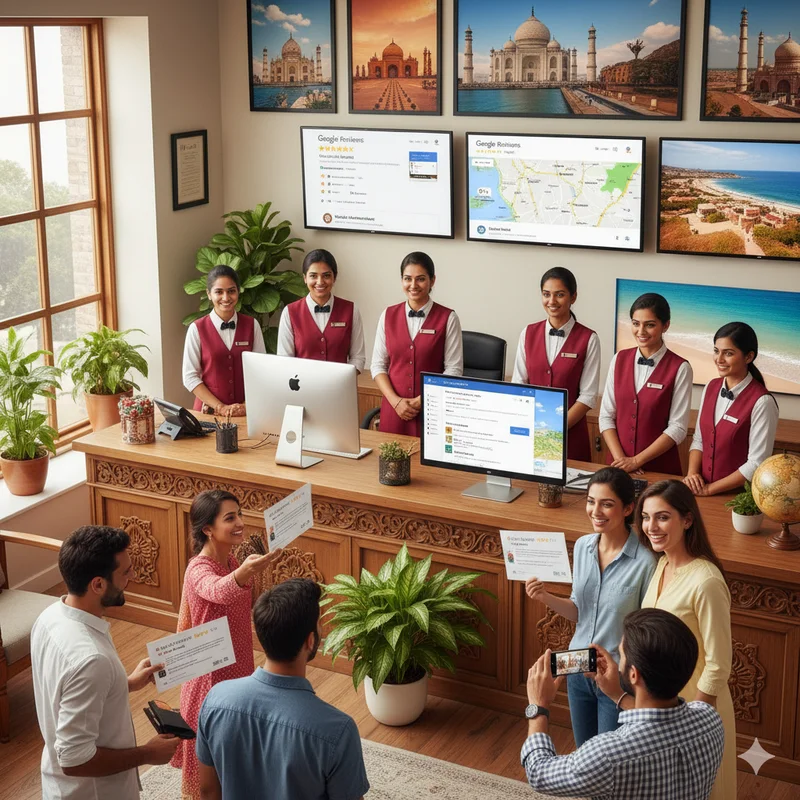
How a Travel Business Used Google Reviews to Rank Top
Introduction
India has a burgeoning travel industry, and competition is intense, especially for small and mid-sized travel agencies attempting to gain traction online. For many local agencies, visibility on Google has become the difference between getting regular bookings and an empty inbox. This is the story of a small travel agency based in Jaipur, Skyline Tours & Travels, that has successfully transformed their online visibility and reputation by exploiting Google Reviews in a strategic manner.
In just eight months, Skyline Tours went from being almost invisible on the web to one of the top three travel agencies in Jaipur when searching on Google Maps. Their case study showcases what small businesses can achieve by using real reviews from the customer, Google My Business (GMB), and platforms such as LocalShouts (https://www.localshouts.com) for building trust in local customers and increasing bookings.
The Challenge: Competing with Established Players
Skyline Tours was founded in 2018 as a travel agency dedicated to offering low cost domestic tours and custom trip planning. They received some offline notoriety, but didn't have a credible digital presence. This presented several challenges.
First, when searching for terms like "Jaipur tour packages" or "travel agents near me," they showed up poorly on Google Maps.
Second, they only had 5 Google reviews (and most of them were old).
Third, they didn't have a consistent strategy to prompt satisfied customers to leave a review.
Fourth, their competitors (mostly with 200-300 reviews) dominated search results in their space.
These new travel agents recognized that 90% of customers were being influenced by Google Reviews, and unless they paid attention to improving their own reviews, they were continually losing potential leads.
Step 1: Build Up the Google My Business (GMB) Profile
Skyline's first project was to properly optimize and fill out their Google My Business listing. They updated their:
Business name, category, and description with keywords relevant to their unique selling proposition (i.e. "travel agency in Jaipur" and "Rajasthan tour packages").
Also, included high-quality images of happy customers, specific destinations, and office interior.
They populated a service list with unique offerings like "honeymoon packages", "Jaipur sightseeing", and "flight bookings".
They made sure to add business hours and contact information to create credibility.
They also created a secondary source: they set up LocalShouts (https://www.localshouts.com) for visitors to read verifiable reviews so they could contact them directly about queries.
Step 2: Making Reviews a Core Part of Customer Experience
Instead of waiting for customers to leave feedback, Skyline made reviews a mandatory final step of their service journey.
Here’s how they did it:
- After every trip, they sent a personalized thank-you WhatsApp message with a direct Google review link.
- Added a QR code to invoices and brochures saying “Share your experience with us on Google!”
- Trained their team to politely request reviews after successful trips.
- Offered a small token of appreciation, like a 5% discount on the next booking, for verified reviewers.
This simple yet consistent approach tripled their monthly review rate within two months.
Step 3: Responding to Every Review—Good or Bad
Skyline quickly realized that responding to reviews builds trust and improves ranking.
Their responses followed this formula:
- Thanking customers by name for positive reviews.
- Acknowledging feedback for neutral or negative reviews and promising improvement.
- Using keywords naturally in responses, like “We’re happy you enjoyed your Jaipur trip with Skyline Tours.”
This strategy signaled to Google that the business was active and customer-focused, which improved local SEO ranking.
Step 4: Encouraging Story-Based Reviews
Not all reviews are created equal. Long, detailed reviews that include keywords (like destination names or service quality) perform better in Google’s algorithm.
So Skyline began requesting experience-based reviews:
“Could you please share what you liked most about your trip to Manali or how our service made your holiday special?”
This resulted in genuine, descriptive reviews filled with useful information and keywords—exactly what Google values for ranking relevance.
Step 5: Leveraging LocalShouts for More Visibility
To strengthen credibility, Skyline listed on LocalShouts (https://www.localshouts.com), a discovery platform for small and micro businesses in India.
Through LocalShouts, they:
- Gained local backlinks that boosted Google’s trust signals.
- Encouraged visitors to cross-check their authentic reviews before booking.
- Received leads from nearby customers searching for travel agencies.
The combination of Google Reviews and LocalShouts visibility doubled their web traffic and led to more booking inquiries directly from Maps and search results.
Step 6: Using Google Insights to Track Progress
Google My Business provides analytics that helped Skyline track what worked best.
They noticed:
- A 240% increase in “calls” and “directions requests” from Maps.
- Their GMB profile appearing in the top 3 search results for over 15 key travel-related keywords.
- A steady rise in impressions as review volume and engagement increased.
They refined their strategy by posting regular updates, photos, and travel tips directly on GMB—keeping their listing fresh and relevant.
Step 7: The Results
After eight months of consistent effort, Skyline Tours saw outstanding improvements. Their Google Reviews rose from just 5 to over 285, and their average rating increased from 4.2 to 4.8. The company’s visibility on Google My Business jumped from low to ranking in the top three results. Website traffic grew from 400 to 2,100 visits per month, while monthly bookings climbed from 20 to 75. Additionally, they gained over 35 verified leads through LocalShouts. Overall, Skyline’s revenue surged by 180%, establishing the brand as a trusted name in local travel.
Step 8: Using Reviews for Marketing
Skyline did not limit themselves to collecting reviews - they also began using the reviews to market:
- Shared screenshots of great reviews on Instagram Stories.
- Posted testimonials publicly on their website and on brochures.
- Created short “Thank You” Reels with happy customers.
This established social proof and further enhanced trust in the brand.
Step 9: Keeping it Going
To keep the momentum going, Skyline set a target of 25 new Google Reviews every month. In addition they:
- Followed up with repeat customers for more reviews.
- Monitored their performance via their LocalShouts and Google Insights dashboards.
- Continued to respond promptly to all customer messages and reviews.
This consistency in engagement allowed Skyline to continue to hold their superior position on Google’s local pack even with new competition.
Lessons From Skyline Tours Success
- Google Reviews is the new word of mouth - it is the driver of visibility, credibility, and conversion.
- Engagement matters - a business responding to reviews demonstrates reliability and improves ranking.
- Long-Descriptive reviews are worth their weight in gold - a lengthy descriptive review adds to the overall SEO relevance.
- Local platforms like LocalShouts have stronger reach - by combining reviews to one resource, your authority is stronger.
- Consistency wins - a steady stream of genuine reviews is more valuable than a one-time campaign.
Conclusion
Skyline Tours' case shows that smaller travel businesses in India can compete with large brands through clever digital efforts. By embracing Google Reviews, participating with customers, and using LocalShouts (https://www.localshouts.com) for local discovery, they not only exceeded their clients initially, but they created a trustworthy, people-first brand.
The takeaway for any travel agency or service-based business is simple: your customers’ voice can become your strongest sales and marketing tool—if you know how to leverage it.
FAQs
1. In what ways do Google Reviews affect rankings of travel agencies?
Google looks at reviews as a ranking signal for a local search. The more recent and positive reviews, the higher the visibility and higher the trust.
2. How did Skyline Tours get so many reviews so quickly?
They requested reviews following trips with direct links and provided some small appreciation for a review.
3. Will negative reviews hurt your ranking?
A few negative reviews will not hurt after you respond professionally and show that you made an effort to resolve the issue. In fact, it improves credibility.
4. How does LocalShouts help travel agencies?
LocalShouts (https://www.localshouts.com) increases local discoverability, provides verified leads, and offers a practice to complement google reviews with a community type of exposure.
5. What type of reviews are best for SEO?
Detailed reviews with key words that include destinations, quality of experience and the actual names of staff work the best.
6. How often should a travel business ask for reviews?
After every service or trip completion. Consistency is key for maintaining top rankings.