Introduction
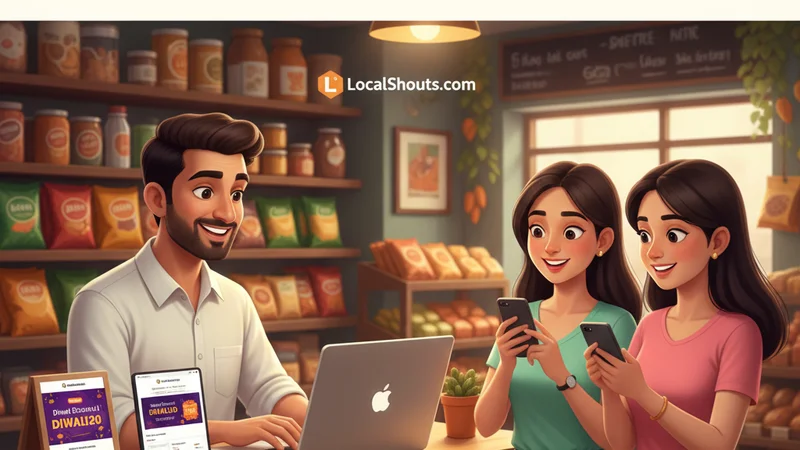
For Indian micro and small enterprises, winning new customers can be one of the largest challenges. Whether it's a local bakery in Pune, a home tailoring business in Jaipur, or a stationery store in Delhi, advertising budgets are frequently low. That's where referral marketing enters.
Referral marketing is the craft of converting happy customers into champions that attract new business. In a day and age where digital advertising and social media rule, this ancient strategy has not only endured but prospered. It is based on trust, social proof, and word of mouth—components that do exceptionally well with local communities.
By combining referral marketing with online tools like LocalShouts (https://www.localshouts.com), Google My Business, and social networks, small businesses can expand their reach, build credibility, and attain long-term growth without investing in expensive mainstream advertising.
What is Referral Marketing?
Referral marketing is a technique in which existing customers refer your services or products to others. It's, in essence, a "word-of-mouth with a system". Referrals draw upon personal trust and social relationships, unlike generic advertising.
For small companies, this is highly effective because:
- It's budget-friendly.
- It keeps existing loyal customers interested.
- It establishes credibility naturally in local communities.
A happy customer inviting your store to friends and relatives has much more power than a billboard or internet advertisement. This credibility factor is worth its weight in gold for small business expansion.
Why Referral Marketing Works for Small Businesses
Referral marketing does what standard advertising typically does not succeed at, particularly for local businesses:
- High Trust Factor: Friends and family recommendations are more trusted than advertisements.
- Lower Costs: Small businesses can get new customers without the cost of big advertising bills.
- Higher Conversion Rates: Referrals are more likely to result in a sale.
- Community Engagement: Neighborhood businesses live and die on relationships; referrals reinforce community ties.
- Long-Term Loyalty: Referring customers are likely to remain loyal themselves.
For instance, a neighborhood bakery with a "refer a friend, free pastry" program can fast-track foot traffic and repeat sales as well as build stronger customer relationships.
Referral Marketing Program Types
Small businesses can execute referral programs in the following ways:
1. Customer-to-Customer Referrals
Traditional referral programs pay current customers for introducing new customers.
Example: "Refer a friend and receive 10% off your next purchase."
2. Employee or Partner Referrals
Staff or local partners may become your brand advocates and share your services with their network.
3. Digital Referral Programs
Online referral links, QR codes, or special codes facilitate easier tracking and rewarding. Local businesses can associate these with their LocalShouts (https://www.localshouts.com) profile for increased visibility.
4. Event-Based or Community Referrals
Linking referrals to local happenings, festivals, or workshops can spur participation. For example, giving rewards for referring people during a Diwali sale will bring in the crowds in a big way.
Rolling Out an Effective Referral Program
Step 1: Set Your Objectives
Are you looking to get more people into your store, drive web orders, or sell more products? Knowing your objective assists in designing your referral strategy.
Step 2: Choose Rewards
Rewards must inspire without bursting the purse. Discounts, loyalty points, or little freebies tend to be most effective.
Step 3: Make Referrals Easy
Streamline the process with shareable links, QR codes, or referral cards. The simpler it is to refer, the greater participation will be.
Step 4: Promote Your Program
Utilize several channels: in-store signage, SMS, email, social media, and your LocalShouts (https://www.localshouts.com) listing.
Step 5: Track and Reward
Monitor who referred whom and ensure timely rewards. Transparency builds trust and encourages more referrals.
Step 6: Thank Your Referrers
A simple thank-you or public recognition can motivate continued participation.
Digital Tools to Enhance Referral Marketing
Digital platforms make referral marketing more effective and scalable:
1. LocalShouts (https://www.localshouts.com)
LocalShouts helps businesses showcase products, promotions, and customer reviews online. Linking referral programs to your profile allows easy sharing and verification.
2. Google My Business
Positive reviews and attaching referral incentives to your GMB listing can drive credibility and search visibility.
3. Social Media Sites
Facebook, Instagram, and WhatsApp are great for publishing referral links, contests, or testimonials.
4. SMS and WhatsApp Marketing
Direct messages can be used effectively to notify loyal customers of referral programs and persuade sharing.
Psychology Behind Referrals
Referral marketing is effective because it takes advantage of human psychology:
- Trust: More people trust friends and relatives than ads.
- Reciprocity: Incentives motivate individuals to participate because they feel they are being rewarded.
- Social Proof: Observing others join persuades more individuals to participate.
- Sense of Belonging: Customers feel part of a community or "insider group" by participating.
These psychological concepts can be applied in small businesses by making referrals rewarding, social, and community-based.
Best Practices for Small Business Referral Programs
- Keep It Simple: Don't have overly complicated rules or steps.
- Be Transparent: Explain clearly how rewards are obtained and redeemed.
- Leverage Customer Stories: Use testimonials to drive engagement.
- Combine Online and Offline Channels: Utilize in-store signage and receipts in addition to digital marketing campaigns.
- Monitor and Optimize: Measure performance and evolve the program for optimum results.
Overcoming Challenges
Referral marketing is not without its challenges:
- Limited Reach: Make digital sharing a part of LocalShouts or social media in order to reach further.
- Tracking Issues: Employ one-time referral codes or web-based tools to track activity precisely.
- Low Engagement: Make rewards attractive, be open and clear, and seek feedback to enhance participation.
With careful planning, these can be controlled, and referral marketing can be a low-cost, high-return tactic.
Case Study: A Local Shop Success
A stationery shop in Indore conducted a referral program providing a small discount for each referred friend. They advertised it through:
WhatsApp messages to loyal customers
Flyers in-store
Their LocalShouts profile (https://www.localshouts.com)
The customer traffic rose by 25% within three months, repeat purchases were boosted, and some customers became active promoters of the brand, posting favorable reviews and sharing experiences online. This is a case in point showing the effect of low-cost, small programs.
Measuring Referral Program Success
To measure success, monitor:
- Number of Referrals: How many new customers arrived through referrals.
- Conversion Rate: Proportion of referred leads who make purchases.
- Customer Retention: Compare referred vs. non-referred customer loyalty.
- Program Participation: Rate of customers actually referring to others.
- Revenue Impact: Evaluate direct impact on sales.
Monitoring these measures ensures the program is both effective and profitable.
Bridging Referral Marketing with LocalShouts
Platforms such as LocalShouts (https://www.localshouts.com) enhance the force of referrals:
Customers can effortlessly share your business with friends.
New leads are able to view verified business details, reviews, and promotions.
Online visibility supports trust and drives conversions.
Merging offline word-of-mouth and online allows for a cohesive referral system for small stores.
Conclusion
Referral marketing is one of the most cost-efficient and reliable methods for micro and small enterprises in India. By getting existing customers to refer others, providing transparent incentives, and utilizing digital channels such as LocalShouts (https://www.localshouts.com), companies can promote growth without massive marketing spend.
It's not just acquiring new customers—it's creating a loyal following. If done with care, referral marketing makes your happiest customers your most effective ambassadors, driving long-term growth and deepening your brand within the local market.
FAQs
1. What is referral marketing for small businesses?
Referral marketing solicits current customers to bring in new customers, sometimes through rewards such as discounts or loyalty points.
2. A small shop can begin a referral program in the following manner:
Define objectives, establish rewards, make the referral process easy, promote via LocalShouts (https://www.localshouts.com) and other avenues, and measure results.
3. Is referral marketing inexpensive?
Yes. It uses present customers and has negligible advertising expenses.
4. Can technology enhance referrals?
Certainly. Sites such as LocalShouts, Google My Business, and social media simplify sharing, monitoring, and rewarding.
5. How do I encourage customers to refer to others?
Provide attractive rewards, make it easy, showcase testimonials, and clearly communicate benefits.
6. How do I define the success of a referral program?
Monitor referrals, conversion rates, retention, participation, and revenue impact to assess performance.