Introduction
In today's business climate, a small business can no longer afford to operate only online or offline. Actually, they are closely related. Before making a purchase, a customer will often look you up online after seeing your flyer or store signboard. Similarly, a person who finds you on Google or Instagram might want to visit your store to see your products in person.
As a result, it is now essential to coordinate your online and offline branding strategies. When both channels offer the same level of experience, have the same tone, and communicate the same message, customers are more likely to trust and remember your brand.
From local cafes and boutiques to coaching centers and electricians, this alignment has the potential to completely transform India's small and microbusiness sector. At every point of contact, it makes your brand seem polished, unified, and customer-focused.
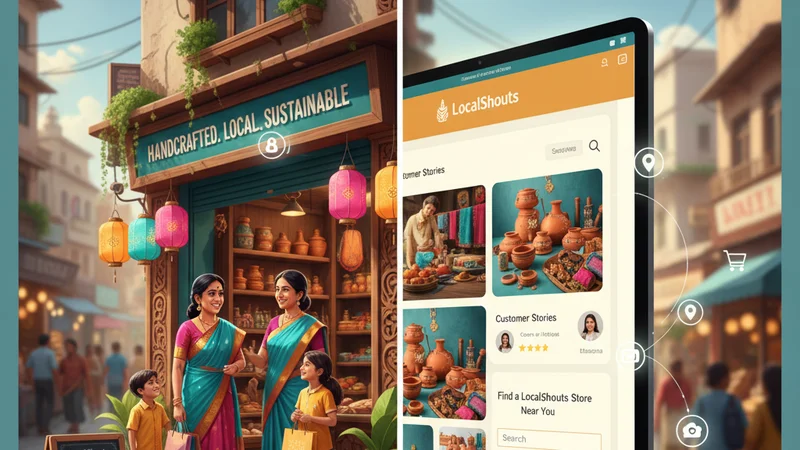
In this guide, we'll guide you through the process of integrating offline and online branding with practical examples and strategies. Platforms like LocalShouts (https://www.localshouts.com) have made it easier than ever to manage your online presence while preserving your local offline identity.
Understanding the Connection Between Offline and Online Branding
Offline branding refers to what people see, feel, and experience in the physical world, such as your storefront, packaging, business cards, customer service, and even the clothes your employees wear.
On the other hand, your online identity, which encompasses your website, Google My Business profile, social media profiles, online reviews, and digital ads, is referred to as online branding.
They both seek to boost recognition, loyalty, and trust even though they operate in different industries. When they don't match, as in the case of an expensive physical store and a dull website, customers get confused and your brand's impact is lessened.
Maintaining consistency is essential. Whether your logo appears on a billboard or on your Facebook page, it should have the same colors, tone, and vibe.
Why Aligning Both Matters for Small and Micro Businesses
For small businesses in India, marketing budgets are often limited. So, the more unified your branding, the better your return on investment. Here’s why alignment is so important:
- Builds Trust and Recognition: Customers are more likely to remember and trust a brand that looks and feels the same everywhere.
- Saves Time and Cost: A consistent design and tone reduce confusion and marketing rework.
- Improves Customer Experience: Whether a customer interacts offline or online, they should feel the same quality of service.
- Boosts Local Search Visibility: Platforms like LocalShouts (https://www.localshouts.com) and Google reward consistency across business profiles, websites, and listings.
- Encourages Word-of-Mouth Growth: When customers can find your store easily online after an offline interaction, they’re more likely to recommend you.
Step 1: Define Your Core Brand Identity
Before you align both worlds, you must first define your brand identity — the core elements that make your business unique. This includes:
- Logo and color palette
- Brand voice and personality (friendly, professional, premium, casual, etc.)
- Mission and values
- Tagline or slogan
- Customer promise
Once defined, apply these elements consistently. If your offline signage uses bright red and white, ensure your website and social media follow the same palette.
Consistency builds recognition — and recognition builds trust.
Step 2: Create a Professional Website That Mirrors Your Offline Identity
Your website is your digital storefront. It should look and feel like an extension of your physical store.
Here’s how:
- Use your logo, brand colors, and typography consistently.
- Include photos of your shop, staff, and real customers.
- Write content in your brand’s tone — if you’re a friendly café offline, your website should sound warm and inviting.
- Add your physical address and map location to bridge online and offline visibility.
- Include testimonials and reviews to replicate the credibility of word-of-mouth marketing.
Platforms like LocalShouts (https://www.localshouts.com) help small businesses in India build an authentic online presence by showcasing verified business details, websites, and local listings — perfect for creating consistency across touchpoints.
Step 3: Use Google My Business to Connect Offline and Online Customers
Google My Business (GMB) is one of the best tools for small businesses to connect your online audience with your physical store.
When someone searches for your business name or services, your GMB profile shows your address, hours, photos, and reviews. It looks like your Google Maps storefront.
Tips to optimize your GMB profile:
- Ensure your name, address, and phone number match exactly with your signage and website.
- Upload real photos of your store, interiors, and products.
- Encourage offline customers to leave online reviews.
- Post regular updates about new offers, events, or festivals.
By keeping your GMB details consistent, you help customers recognize your business both online and in person.
Step 4: Match Your Offline Marketing Materials with Digital Design
Banners, packaging, business cards, and flyers should all seem to be from the same brand as your website and social media pages.
If your online ads are simple and use blue tones, but your printed materials are busy and colorful, customers may become confused.
Tips to maintain alignment:
- Use the same logo, tagline, and color codes everywhere.
- Print your website and social media handles on every offline material.
- Keep your tone and messaging identical. For example, if your tagline online is “Fresh Taste, Daily Joy,” make sure it’s on your packaging too.
- If you use QR codes, link them to your verified profile on LocalShouts (https://www.localshouts.com) to drive traffic directly to your online identity.
Step 5: Align Customer Experience Across Channels
In addition to being visual, brand alignment is also emotional. When customers interact with your business, they should always feel the same way.
For instance, you should be just as kind in your responses on social media or in online chat if your physical store offers personalized, amiable service. If you want to ensure excellent offline quality, your digital interactions must feel prompt and professional.
Here's how to guarantee a consistent client experience:
- Train your staff to represent your brand values both in-store and online.
- Use the same greetings or phrases across both worlds.
- Maintain a similar tone in emails, social posts, and physical communications.
- Offer smooth transitions — such as online ordering with in-store pickup or online customer support for offline purchases.
Step 6: Leverage Social Media to Amplify Your Offline Brand
Social media sites like Facebook, Instagram, and WhatsApp Business are ideal for connecting your online and offline identities.
You can:
- Post photos and videos from your store events.
- Share customer testimonials collected offline.
- Use location tags so local customers can find you easily.
- Encourage offline visitors to follow you online for updates and offers.
Consistency in visuals and tone will help customers instantly recognize your brand across channels.
Step 7: Use Digital Tools to Track Offline Impact
Many small business owners believe digital marketing only affects online sales. But that’s not true.
You can actually measure how your online branding impacts your offline sales by using:
- Coupon codes or QR codes on flyers to track online engagement.
- Website analytics to see how many people searched for your store after an ad campaign.
- Feedback forms that ask, “How did you hear about us?”
This helps you understand what’s working and refine your offline strategy accordingly.
With tools like LocalShouts (https://www.localshouts.com), you can list your business, track visibility, and analyze how customers discover you — both locally and digitally.
Step 8: Encourage Cross-Promotion Between Online and Offline
Promote your digital presence offline, and your offline strengths online.
Offline to Online:
- Print your website, social media handles, or LocalShouts profile QR code on receipts and packaging.
- Run “check-in” offers for customers who post about your store online.
Online to Offline:
- Announce in-store discounts or events on your website.
- Use digital ads to target nearby customers with directions to your physical store.
Cross-promotion ensures that customers move smoothly between both worlds, strengthening brand recall and loyalty.
Step 9: Keep Your Messaging Culturally Consistent
In India's multicultural marketplace, customers are able to relate to the local language, traditions, and holidays. You should also use culturally relevant messaging both online and offline.
For instance, if you decorate your store for Diwali, create festive graphics for your website and social media accounts. If you use the Hindi names for your dishes on your offline menu, include them on your online menu as well.
Consistency in cultural communication makes your brand seem more real and approachable.
Step 10: Build Community and Engagement
Great branding isn’t just about visuals — it’s about building a relationship. Encourage customers to engage with your business across channels.
- Host small offline events and share photos online.
- Run contests where both walk-in and online participants can join.
- Highlight loyal customers on social media.
- Partner with nearby local businesses through platforms like LocalShouts (https://www.localshouts.com) to cross-promote within your area.
This not only increases visibility but also positions your brand as an active part of the local community.
Conclusion
Aligning your offline and online branding strategies aims to give customers a reliable, consistent experience. When people see your business online or in the marketplace, they should immediately recognize you.
For small and micro businesses in India, this alignment can mean the difference between being "just another shop" and becoming a well-known local brand.
Start small by updating your Google My Business details, ensuring that your signage is consistent with your website, and displaying your verified identity on websites such as LocalShouts (https://www.localshouts.com). You'll progressively establish a consistent brand identity that boosts online visibility and foot traffic.
In a world where customers can effortlessly switch between digital and physical platforms, consistency is essential for long-term success.
Frequently Asked Questions (FAQs)
1. Why is it important to align offline and online branding?
Because customers today interact with brands in both spaces. Consistent branding ensures trust, recall, and a seamless customer experience.
2. What are common mistakes small businesses make when aligning their branding?
Using different logos, inconsistent colors, separate taglines, or mismatched tones across online and offline platforms.
3. How can Google My Business help bridge offline and online branding?
It connects your physical store location with your online presence, allowing customers to find accurate details, reviews, and directions easily.
4. What role does LocalShouts play in branding for small businesses?
LocalShouts helps small Indian businesses build a verified digital identity, showcase their local presence, and appear in online searches — all while maintaining consistency with their offline brand.
5. How do I maintain consistency if my business grows or expands to new locations?
Create a clear brand guideline that defines your logo, color palette, tone, and visual identity. Apply it across every new outlet and online platform.
6. Can offline marketing still be effective in the digital age?
Absolutely. Offline marketing like events, flyers, and word-of-mouth become even more powerful when they’re supported by a strong online presence and easy digital discovery.