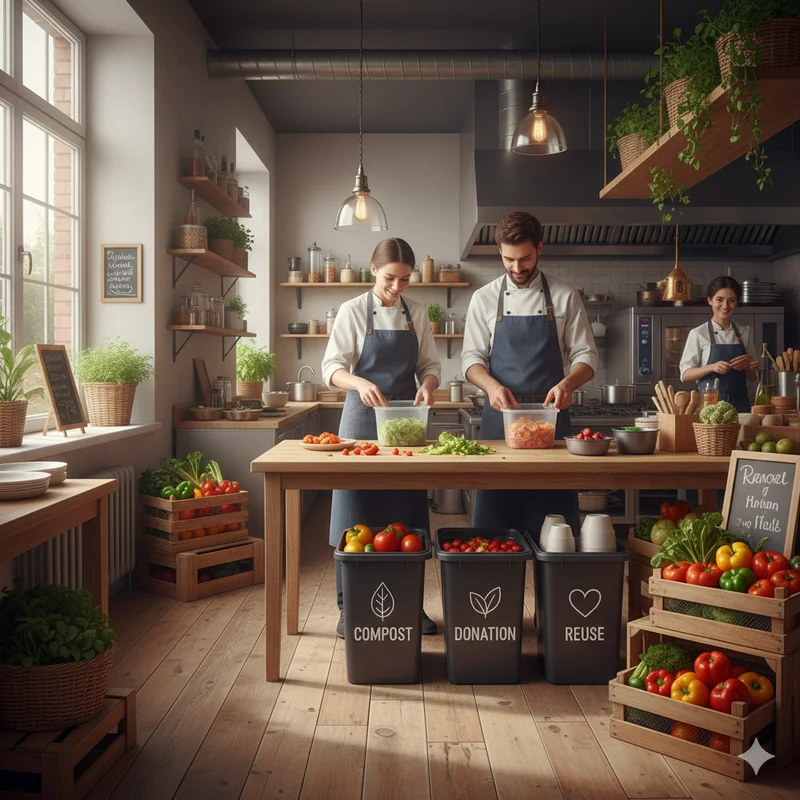
Introduction
Every restaurant owner would like to serve scrumptious meals, delight patrons, and generate revenue — but one silent challenge that often goes unnoticed is food waste.
Food scraps and spoiled bread, surplus meals and uneaten leftovers add up quickly. For a local restaurant, this isn't a moral issue, it's an economic, environmental, and reputational issue.
In a country like India, where many millions live with food insecurity, food waste in a hospitality setting carries additional weight. Thankfully, even local small eating establishments, cafes, and eateries are reinventing the wheel and finding more savvy ways to eliminate, extract, and recover waste -- easily turning an old problem into a new opportunity.
In this article, we identify actionable steps that local restaurants can implement to reduce food waste, save money, and help the planet.
1. Understanding the Impact of Food Waste
Before solving the issue, it’s important to understand its scale. Studies show that India wastes nearly 68 million tonnes of food annually. In restaurants, this happens at various stages — purchasing, storage, preparation, and post-service.
Here’s why it matters:
- Financial loss: Wasted ingredients mean wasted money.
- Environmental damage: Decomposing food releases methane — a potent greenhouse gas.
- Social cost: Edible food could feed those in need.
- Brand image: Customers today prefer eco-conscious businesses.
By controlling waste, local restaurants can save up to 20–30% on costs while building a more responsible brand identity.
2. Carry out a Waste Audit
The first action to take in better managing food waste is to measure it. Waste audits help you understand what is being thrown away and why.
How to do it:
- Keep track of all food that is thrown away for an entire week.
- Sort the waste into categories (prep waste, plate waste, spoiled stock, etc.).
- Look for trends in the categories — for example, were salads being thrown away, did certain items spoil too early, etc.
- Ask your staff to participate — write down the reasons why items were pulled and any suggestions.
It is a simple exercise but provides useful information to help you target areas for change.
3. Inventory Management
Smarter inventory management will help reduce over-purchasing, which is one of the largest causes of waste. Local restaurants can help eliminate food waste by utilizing smarter inventory control techniques. Here are some unique tips for improving inventory management:
- Adhere to an inventory turn schedule of first-in, first-out.
- Keep a log of all items sold daily, and adjust future orders accordingly.
- Purchase in smaller quantities if the suppliers are close by.
- Monitor all expiration dates and storage conditions.
You can also strive to have your restaurant listed on LocalShouts (https://www.localshouts.com), a platform that allows you to connect with local farmers, suppliers, and vendors who help in providing fresh produce in smaller amounts that are easier to manage.
4. Portion Control and Menu Design
Large portions often look generous, but they lead to higher waste and lower profit margins.
Instead, analyze what customers actually consume.
Practical steps:
- Offer two portion sizes (regular and large).
- Use smaller plates for heavy dishes.
- Simplify the menu by removing rarely ordered items.
- Highlight customizable options — “half plate,” “mini meal,” or “light bite.”
These small adjustments make a big difference, both in customer satisfaction and waste reduction.
5. Smart Food Storage Techniques
Improper storage is another major reason for spoilage.
Every local restaurant, no matter how small, should follow basic cold storage and preservation standards.
Storage best practices:
- Label all containers with the date and name of the ingredient.
- Keep raw and cooked foods separate.
- Use airtight containers for dry goods.
- Store perishable items like dairy and meat at the right temperature.
- Regularly clean refrigerators and freezers.
By maintaining proper storage discipline, restaurants can extend the shelf life of ingredients by up to 30–40%.
6. Creative Use of Leftovers
Not all leftover food needs to be discarded. Many local chefs are getting creative with surplus items to create new dishes or special menus.
For example:
- Stale bread → croutons, breadcrumbs, or puddings
- Vegetable peels → stock, soups, or compost
- Leftover rice → fried rice or rice balls
- Overripe fruits → smoothies or jams
As long as hygiene is maintained, this not only reduces waste but also adds variety to your offerings.
7. Donation and Redistribution
If your restaurant is part of a community where extra safe-to-eat, cooked food is often available, think about donating it (to those in need). In India, there are organizations that facilitate this process:
- Feeding India (by Zomato).
- Roti Bank.
- Robin Hood Army.
- No Food Waste.
LocalShouts (https://www.localshouts.com) is another way to promote your restaurant's social initiatives that will also attract consumers who care about your donation.
Donating excess food not only serves your community well, it also strengthens your brand as a socially conscious business owner.
8. Composting and Recycling
If there is uneaten food or food scraps that cannot be reused or donated, the best solution is to compost the leftover food. Composting is a way to convert organic waste into a nutrient-rich compost or fertilizer for local farmers or gardens. Here are some options for restaurants:
- Compost, in a small tub, vegetable waste yourself.
- Find a commercial composting company that you can partner with.
- Work with nearby community gardens or farmers that will take your compost.
You can even advertise your "Zero-Waste Café" initiative through LocalShouts to show your environmental sustainability pledge and inspire others to do the same.
9. Employee Training and Engagement
Waste reduction is a team effort.
Your chefs, waiters, and kitchen staff all play a part in how efficiently food is handled.
Ways to involve your staff:
- Train them on portion control and storage hygiene.
- Encourage feedback on wastage issues.
- Reward teams for waste-reduction milestones.
- Display posters with reminders like “Use. Don’t Waste.”
When your team feels responsible, waste management becomes part of the restaurant’s culture.
10. Technology Tools for Waste Reduction
Several modern tools and apps help restaurants manage food better:
- POS systems with real-time sales tracking
- Inventory management software that alerts before expiry
- Waste-tracking apps to identify problem areas
- Smart fridges that monitor temperature and freshness
These tools may seem like an investment, but they save thousands over time.
Additionally, digital platforms like LocalShouts allow local restaurants to gain online visibility, find suppliers, and promote eco-friendly initiatives — all of which contribute indirectly to smarter operations.
11. Customer Engagement and Awareness
Customers love supporting restaurants that care about sustainability.
You can use this to your advantage through small, thoughtful gestures:
- Add a “We Reduce Waste” note on your menu.
- Offer discounts for finishing meals or avoiding plastic packaging.
- Educate customers through posters or social media posts.
- Encourage takeaway customers to bring reusable containers.
When people feel part of your cause, they help spread the word — and your restaurant earns loyal patrons who share your values.
12. Partnering with Local Farmers
Instead of depending solely on large distributors, partner with local farmers for fresh produce.
This helps you:
- Get seasonal ingredients at lower prices.
- Reduce transport waste and emissions.
- Support the local economy.
Many local restaurants featured on LocalShouts have already started collaborating directly with nearby farms — creating a true farm-to-table experience while cutting waste.
13. Tracking Progress and Staying Consistent
Waste management isn’t a one-time fix — it’s an ongoing habit.
Track your progress regularly:
- Compare monthly waste reports.
- Identify the top three waste items.
- Adjust purchasing and menu design accordingly.
- Celebrate milestones like “10 kg less waste this week!”
These habits not only improve efficiency but also make your restaurant a model for sustainability.
14. The Business Benefits of Managing Food Waste
Reducing food waste does far more than save money — it improves your brand’s long-term potential.
Key benefits include:
- Lower food costs and higher profits
- Better inventory control
- Positive brand reputation
- Employee engagement
- Environmental sustainability
As customers increasingly choose ethical and eco-friendly dining options, being known for your waste-reduction efforts can set your restaurant apart in a crowded market.
Conclusion
Food waste is a challenge every restaurant faces — but it’s also a chance to innovate and lead.
By tracking waste, managing inventory, reusing creatively, and building awareness, local restaurants can cut costs and contribute to a better world.
Sustainability isn’t just a trend; it’s the future of the food industry.
When your restaurant operates responsibly, it attracts not just customers — but community trust and long-term loyalty.
If you’re a restaurant owner ready to showcase your responsible dining approach, list your business on LocalShouts. It’s where eco-conscious customers discover and support local food heroes making a difference.
FAQs
1. Why is managing food waste important for local restaurants?
It reduces costs, helps the environment, and strengthens a restaurant’s brand image as a responsible business.
2. What are simple ways to start reducing food waste?
Track daily waste, manage inventory better, use leftovers creatively, and donate extra food.
3. Can small restaurants afford food waste management systems?
Yes. Many solutions like FIFO labeling, small-batch buying, and composting are low-cost but highly effective.
4. What can restaurants do with unavoidable waste?
They can compost organic waste, recycle packaging, or collaborate with farmers who use compost as fertilizer.
5. How can LocalShouts help restaurants reduce waste?
By connecting restaurants with local suppliers, promoting eco-friendly initiatives, and helping them reach conscious customers online.
6. How does waste management affect customer loyalty?
Customers prefer eco-conscious brands. When they see your commitment to sustainability, they are more likely to return and recommend your restaurant.