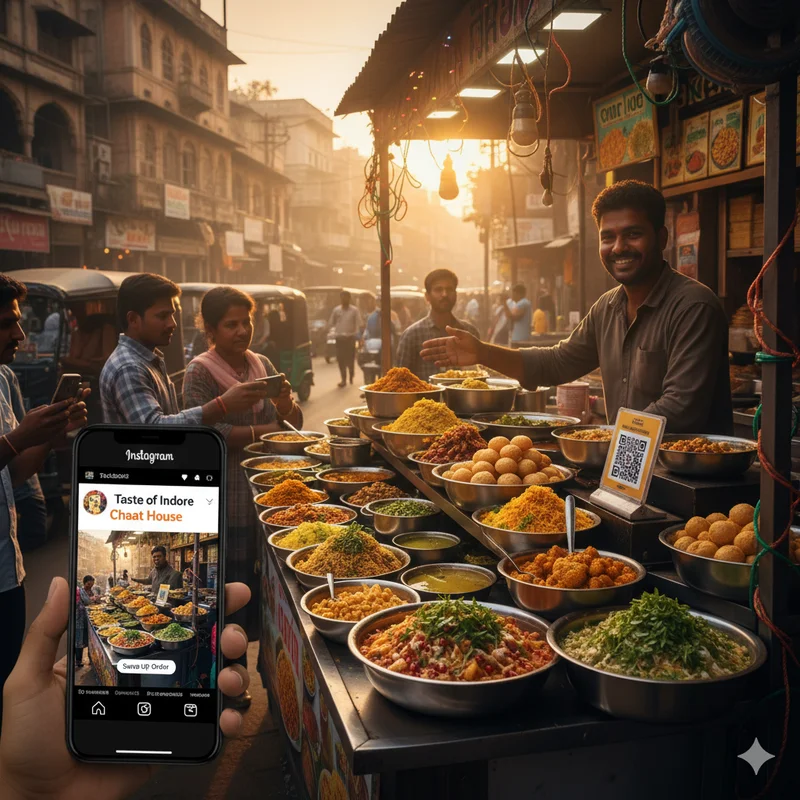
Introduction: The Power of Going Digital—Even for Street Vendors
If we think of digital marketing, we usually think of technology companies, pub/concept restaurants, or e-commerce brands. However, in this connected world, everyone has the ability to engage thousands of people online - as long as you know how to use some digital tools effectively.
This is exactly what “Chatori Chaat Corner” accomplished, a small street food stall you can find on occasion in Indore. What started as a pushcart selling spicy aloo chaat and pani puri became a local phenomenon that everyone in the city quickly learned about - achieved solely through a few digital ads and a clear growth strategy.
This is more than a marketing story, it is truly a story of innovation, courage, and the implications of entrepreneurship beyond traditional business confines.
Chapter 1: The Beginning — One Cart and a Big Dream
In 2019, Sandeep Yadav, a 27-year-old food lover, set up his first chaat cart near a college campus in Indore. With limited savings, he could afford only one gas stove, a small umbrella, and a few fresh ingredients.
Despite serving delicious food, he noticed a problem:
“People loved my taste but often forgot where I was the next day.”
His footfall depended entirely on passersby and word-of-mouth. Some days he sold out, while others were painfully slow. Sandeep realized that to build a consistent customer base, he needed visibility — not just physical, but digital.
Chapter 2: The Turning Point — Going Online
In 2021, during a local food festival, Sandeep met a marketing student named Ritika, who offered to help him set up a Google My Business (GMB) profile and Facebook page for free.
They clicked photos of his chaat varieties, uploaded the menu, and added his exact location on Google Maps. The change was instant — customers started finding him through searches like “best chaat near me” or “Indore street food stall.”
But Ritika had a bigger idea:
“Let’s run small digital ads. You don’t need to spend much — just ₹200 a day can make a difference.”
Sandeep hesitated at first. Spending on ads seemed risky for someone earning ₹1,200–₹1,500 a day. But he decided to give it a try.
Chapter 3: Crafting the First Digital Ad
The first campaign was very simple but effective. Ritika created a post on Facebook and Instagram Ads that simply said:
“Do you love spicy chaat? You should visit Chatori Chaat Corner near Rajiv Gandhi Square - Try our special crispy aloo chaat! 😋 Open every day from 4 PM - 10 PM."
They targeted people in a 2 km radius, aged 16-35 and mostly students, local office workers, and local residents.
Their budget? Only ₹150 per day.
Sandeep was pleasantly surprised when people began to walk in and say,
“We saw your ad on Instagram!”
After that week, there was a 30% increase in sales.
Chapter 4: Smart Ad Targeting — The Real Game-Changer
Encouraged by the early results, Ritika fine-tuned the strategy. Instead of running generic ads all the time, they started theme-based campaigns:
- “Rainy Season Special” — featuring hot masala chai and crispy samosas.
- “Exam Break Snack Deals” — targeting students during exam weeks.
- “Sunday Family Treat” — promoting combo deals for groups.
Each campaign used eye-catching photos, local hashtags like #IndoreEats and #ChatoriChaat, and short videos of the sizzling food being prepared.
They also boosted posts during evening hours, when people were most likely to decide where to eat.
The strategy worked wonders — footfall during weekends doubled, and average daily sales touched ₹3,000.
Chapter 5: Listing on LocalShouts — Reaching the Community
To drive even more visibility, Sandeep went ahead and listed the business on LocalShouts (https://www.localshouts.com)—a well-known platform for local businesses to connect with local customers.
Sandeep's LocalShouts profile included the following:
- Store photos
- Menu details
- Offers for loyal customers
- Direct link to his WhatsApp number for orders
Soon when someone started searching for “best chaat in Indore” Chatori Chaat Corner immediately surfaced among the top listings—alongside the much larger businesses.
LocalShouts also assisted him in running location-based promotions to reach food lovers within walking distance who may never have known about the store.
Chapter 6: Adding Creativity — Video Ads and Reels
By 2022, Sandeep was no longer shy around cameras. He was making cameos in some short Reels and videos showing the behind-the-scenes at his store—pouring tangy pani puri water, tossing spicy bhel, and bantering with customers.
The videos, along with tiny sponsored boosts, went mildly viral in Indore.
One, 20 second, video titled “Watch how we make Indore’s crispiest aloo chaat!” garnered 30,000 views in local traffic in just two days.
All this attention not only added up to increased sales, it helped create more of a local identity — now customers were calling him Chatori Bhaiya.
Chapter 7: Festival Promotions and Offers
Sandeep learned that ads work best when tied to festive moments. During Diwali and Holi, he launched short-term campaigns offering:
- “Buy 2 Chaats, Get 1 Free!”
- “Free Papdi Chaat for Couples on Valentine’s Day!”
These ads, targeted within a 3 km area, brought families and couples to his stall in large numbers. His Diwali week sales nearly tripled compared to normal days.
By now, Sandeep was spending around ₹4,000–₹5,000 a month on ads — and earning nearly ₹70,000–₹80,000 in revenue.
Chapter 8: Expanding With Data Insights
Digital ads gave Sandeep access to something no traditional banner could: data.
He learned that:
- 65% of his audience was between 18–30 years old.
- Most engagement came from mobile users browsing in the evening.
- The “Rainy Season” ads had the highest click-through rate (CTR).
Using these insights, he adjusted his menu — adding hot pakoras and chai during monsoon, and refreshing drinks in summer.
This data-driven approach helped him serve exactly what customers wanted, when they wanted it.
Chapter 9: Collaborations and Influencer Marketing
Sandeep took it a step further by collaborating with local food bloggers and college influencers.
He offered them free tasting sessions in exchange for Instagram posts and short review videos.
The response was overwhelming. Within a month, one viral post titled “The Tastiest Chaat in Indore — Under ₹50!” got 50,000+ views and brought in hundreds of new customers.
His follower count grew to 9,000+, making him one of the most followed street food vendors in the city.
Chapter 10: Numbers That Tell the Story
After introducing digital ads (by 2024), the business saw dramatic growth compared to 2020:
- Daily Footfall increased from 40–50 to 180–200 visitors.
- Average Daily Sales rose from ₹1,200 to ₹4,000+.
- Monthly Revenue grew from ₹36,000 to ₹1.2 lakh.
- Social Media Followers expanded from 0 to 9,000+.
- Local Visibility (searches on LocalShouts) jumped from none to 12,000+ monthly.
Sandeep didn’t just grow his income — he built a personal brand. People from nearby cities started visiting after seeing his online presence.
Chapter 11: Challenges Along the Way
Every successful journey has roadblocks. Sharon's major hurdles were:
- Limited Knowledge of the Digital World: Initially, he was unaware of how targeting or budgets worked. Eventually, he learned through YouTube videos and Ritika's mentorship.
- Managing Time: It wasn't easy for him to minimize multitasking food preparation, dealing with customers, and posting online. He has learned to schedule posts during off peak times.
- Internet and Ad Fraud Issues: Few fake ad agencies reached out to him offering things like "going viral." He learned to manage ads himself and stick with reliable agencies like LocalShouts.
These lessons would eventually make him a smarter entrepreneur — one who relies on data rather than someone's random opinion.
Chapter 12: From Stall to Kiosk — The Expansion
In 2023, with growing revenue and a loyal following, Sandeep invested in a permanent kiosk at a busy food street in Indore.
He retained the same name, Chatori Chaat Corner, and used his digital audience to announce the opening. Within the first week, customers lined up for hours — many saying, “We saw your story online!”
Today, Sandeep employs three staff members, manages online delivery via WhatsApp orders, and even runs a weekend catering service.
Chapter 13: Lessons for Local Businesses
Here are key takeaways from Sandeep’s success that any small business can apply:
1. Start Small, But Be Consistent: Even ₹150–₹200 daily ad spend can make an impact if you target the right audience.
2. Use Local Platforms: Listing on LocalShouts (https://www.localshouts.com) helps customers find you easily and builds credibility.
3. Tell Your Story: Show your face, share your process, and engage customers emotionally — authenticity beats expensive ads.
4. Track and Adapt: Use insights from Facebook, Instagram, and Google to understand your audience and adjust offers accordingly.
5. Think Community, Not Competition: Collaborate with nearby stalls or food bloggers — together, you grow faster.
Chapter 14: The Emotional Side of Success
Beyond numbers, Sandeep’s journey is deeply emotional. From selling chaat to survive, to becoming a mini-celebrity in his neighborhood — it’s proof that dreams can thrive anywhere, even on the streets.
His parents, once skeptical about his career choice, now proudly say:
“Our son didn’t just sell chaat; he built a brand.”
He continues to inspire hundreds of local vendors through workshops organized by the city’s food association, teaching them how to advertise smartly on a budget.
Conclusion: Street Success in the Digital Era
The advancements of Chatori Chaat Corner show that you don't need a huge restaurant or fancy website to make an impact. With ingenuity, authenticity, and smart digital advertising, you can turn even the tiniest food cart into an impactful brand.
Digital marketing is now regarded as essential for small and micro businesses, rather than just a tent to be pitched. Organizations like LocalShouts ( https://www.localshouts.com ) bridge this digital divide for entrepreneurs like Sandeep so they can reach their customers faster, and smarter.
If a vulnerable street vendor can achieve this level of success with one cart - imagine what your local business could do with a digital push.
FAQs
1. How much did Sandeep spend on digital ads?
He started with ₹150/day and gradually increased to ₹4,000–₹5,000 per month as profits grew.
2. What platforms worked best for him?
Facebook and Instagram Ads performed best, along with his listing on LocalShouts for local visibility.
3. How did he attract young customers?
By creating short, engaging videos and running location-based campaigns targeting college students.
4. Was technical knowledge required?
Minimal. He learned through online tutorials and trial and error, proving anyone can do it.
5. What was his biggest marketing success?
His “Rainy Season Special” video ad — it tripled his weekend footfall.
6. Can other street vendors replicate this?
Yes. With help from platforms like LocalShouts (https://www.localshouts.com), any vendor can start with small budgets and scale up gradually.