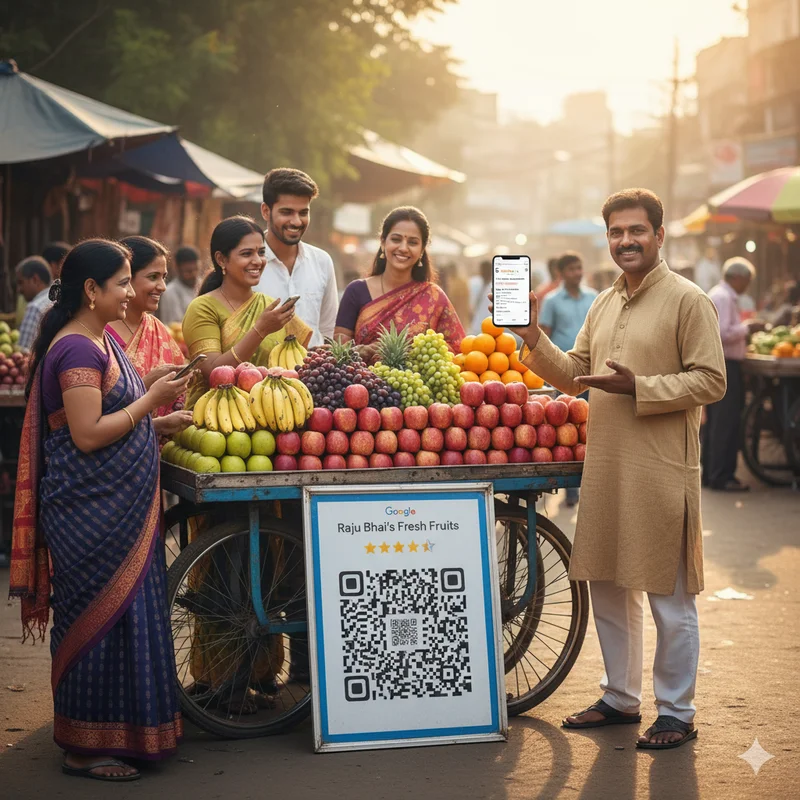
Introduction: From a Wooden Cart to a Digital Journey
On a busy street in Nagpur, under the shade of a large peepal tree, stood a wooden cart full of fresh fruits — apples, bananas, mangoes, and papayas stacked neatly by color. For years, Ramesh Yadav, the owner, sold fruits to passersby and local families, relying entirely on word-of-mouth and his cheerful smile.
But when the pandemic hit, everything changed. Customers stopped coming, and competition from online grocery apps grew. Ramesh realized that if he didn’t adapt, his small business would disappear.
That realization sparked a journey that turned Ramesh from a traditional vendor into a tech-savvy local hero — proving that technology isn’t just for big brands, but for anyone with the will to grow.
Chapter 1: The Struggle That Sparked Innovation
Prior to 2020, Ramesh's fruit cart was bringing in revenue to support his family of five. Then, with lockdowns and restricted movement, his daily sales were cut by nearly 70%.
"My fruits were rotting before I was able to sell them. Everyone was fearful of coming out," Ramesh would recall.
One day a regular customer, Priya, a college student, recommended that he try digital payments and put himself online. She explained platforms like Google My Business and LocalShouts (https://www.localshouts.com), tools that would help him reach people locally who would still want fresh fruits delivered safely.
Ramesh was nervous about trying this strategy, he didn't even own at smartphone. However, Priya assisted him in purchasing a budget phone and that's when his process of transformation began.
Chapter 2: Going Digital, One Step at a Time
The first step was simple — setting up Google Pay and a QR code for payments. Customers no longer needed cash; they could scan and pay in seconds.
He proudly placed a small board on his cart:
🟢 “Digital Payments Accepted Here — Google Pay | PhonePe | Paytm”
Soon, more customers started returning because it was convenient. But Ramesh didn’t stop there. With Priya’s help, he created a Google My Business profile called “Ramesh Fresh Fruits - Nagpur”, including photos, opening hours, and delivery options.
Next, he registered his stall on LocalShouts (https://www.localshouts.com) under “Fruit Vendors Near Me”. Local residents searching for fresh fruit nearby started finding his business online.
“I didn’t know people searched for fruits online. Suddenly, strangers were calling me to place orders!” Ramesh said, smiling.
Chapter 3: Building Trust Through Online Reviews
Ramesh soon realized that trust was key. He encouraged happy customers to leave reviews on his Google My Business page.
Within two months, his profile had over 100 positive reviews, with comments like:
⭐ “Always fresh and sweet fruits!”
⭐ “Fast delivery and honest pricing.”
⭐ “Ramesh bhai is the most polite vendor I’ve met.”
Those reviews became his biggest marketing tool. When people searched for “best fruit seller near me,” his name appeared right on top.
Chapter 4: WhatsApp Orders and Delivery System
To make things easier, Ramesh created a WhatsApp Business account. He uploaded his weekly price list, product photos, and delivery timings.
He started sending morning updates to his regular customers:
📢 “Good morning! Fresh Nagpur oranges and Shimla apples available today 🍊🍎 Free delivery within 3 km!”
Orders started pouring in — not just from walk-in customers but from nearby societies, schools, and even offices.
He partnered with a local auto driver for deliveries, giving him an extra income too. What started as a simple fruit cart had now turned into a small local delivery business.
Chapter 5: Creating a Local Brand Identity
Ramesh realized that presentation mattered. He printed simple paper bags with the name “Ramesh Fresh Fruits” and a smiling fruit logo designed by a local college student.
He also began posting short videos on Instagram Reels and LocalShouts, showing how he selected the freshest fruits from the wholesale market at 5 AM, cleaned them, and arranged them neatly for customers.
The videos went viral locally. People loved the authenticity and his warm personality. Soon, he was invited by a community page to share his story about “How Small Businesses Can Go Digital.”
“I didn’t understand all this online fame,” he laughed. “But I liked that more people started trusting me.”
Chapter 6: Data and Smart Selling
Over time, Ramesh started recognizing patterns in his sales:
- More banana and apple sales on Mondays (because school begins again)
- Peaks in mango sales at the beginning of the summer
- Higher orders before local celebrations like Ganesh Chaturthi
With all this information he was able to plan his stock better: purchasing just enough so as to not waste any inventory.
He also used LocalShouts' business insights to measure how many viewers viewed his shop listing, what keywords they searched with, and which posts received the most interaction.
All of this enabled Ramesh to make thoughtful decisions about his inventory and he was able to reduce any losses by 30%.
Chapter 7: Community Connections and Word of Mouth 2.0
Ramesh understood that relationships still mattered. He continued his old tradition — giving a free banana or apple to kids who came with their parents.
He also began offering “Fruit for Health” boxes — small baskets curated for gym-goers, elderly citizens, and students, which became a big hit.
His local fame grew so much that nearby schools started buying from him for their events. His customers became his promoters — sharing his QR code, reviews, and LocalShouts profile on WhatsApp groups.
“I didn’t have to shout to attract customers anymore — the internet shouted for me,” he joked.
Chapter 8: Results of Growth
Here is what Ramesh accomplished after a year of adopting technology:
✅ Revenue Increase: 250% from the previous year
✅ Customer Growth: 50 regular customers to more than 300
✅ Online Data: 1,500 unique profile views monthly on LocalShouts
✅ Reviews Average: 4.9 stars on Google
✅ Waste Reduction: Significant spoilage reduced by 30% due to smarter planning
Today, Ramesh has not only grown his fruit business from a roadside stall, but is now recognized as a brand in Nagpur, one that is trusted for its freshness and treating customers with innovation.
Chapter 9: Lessons for other small vendors.
1. Start small, and step by step.
There is no need for fancy apps — just a smartphone, a QR code, and a Google My Business profile; you can do amazing stuff.
2. Digital trust builds loyalty.
Many more customers find positive reviews and consistently posting attracts them much quicker than advertising.
3. Discoverable with LocalShouts.
Services like LocalShouts (https://www.localshouts.com) help small vendors be found in local searches, connect to buyers in nearby locations, and help establish trust in your business.
4. Consistency brings community.
Posting regularly on WhatsApp and social platforms can keep your brand a priority in the minds of potential customers.
5. The human touch wins hearts.
Even in this day and age, kindness and personal service remain most valuable.
Conclusion: The Sweet Taste of Growth
From a humble wooden cart to a thriving tech-enabled business, Ramesh’s journey proves that technology isn’t about gadgets — it’s about growth mindset.
By combining his traditional values with modern tools like LocalShouts, Google My Business, and WhatsApp Business, Ramesh didn’t just survive tough times — he flourished.
As he proudly says:
“I used to sell fruits to people who walked by. Now, people search for me online. That’s what technology did for me.”
His story reminds every small business owner that embracing change — one small digital step at a time — can lead to extraordinary growth.
FAQs
1. What technology did Ramesh use first?
He started with QR codes for digital payments, then moved to Google My Business and LocalShouts listings.
2. How did LocalShouts help him grow?
It made his stall discoverable in “fruit vendors near me” searches, bringing in new local customers.
3. How did he manage deliveries?
He used WhatsApp Business for orders and collaborated with a local auto driver for deliveries.
4. Was social media important?
Yes, short Instagram and LocalShouts videos helped humanize his brand and attract younger audiences.
5. What challenges did he face?
Learning to use a smartphone and managing online updates, but he overcame them with local help.
6. What’s next for Ramesh?
He plans to open a small outlet with cold storage and launch a “Healthy Fruit Box Subscription” online.