Introduction
In today's competitive small and micro business world, getting a customer is just half the challenge — keeping them in hand is the true key to success. Repeat customers do not just come back for more purchases; they become champions of the brand, creating positive word-of-mouth and a ripple effect for expansion.
One of the best mechanisms to create this long-term relationship is a loyalty scheme. Although large organizations tend to have complex points systems and tiered rewards, small businesses can utilize straightforward, low-cost loyalty programs that bring tangible results.
For Indian small and micro enterprises, combining loyalty programs with an impeccable digital presence — via channels such as LocalShouts (https://www.localshouts.com) — enables you to reach out, monitor engagement, and reward repeat business.
In this article, we delve into why loyalty programs are crucial, how they affect customer behavior, and how even small businesses can create strategies that promote enduring loyalty.
Understanding the Concept of Loyalty Programs
A loyalty scheme is an organized framework whereby companies reward recurring customers for their continued support. Rewards are anything: points for every purchase, discounts, promotions, or privileged entry to events or products.
The main aim is to keep customers. Keeping a customer costs a fraction compared to gaining a new one. A modest improvement in retention increases profit considerably, as proven by research.
For instance, a Pune café with a "buy 9 coffees, get the 10th one free" card offers incentive for return visits as well as a sense of gratitude. The gesture of this one-time act is enough to make casual visitors repeat customers.
Why Loyalty Programs Build Long-Term Brand Loyalty
Loyalty programs are more than transactions. They shape how your customers think and engage with your brand.
1. Creating Emotional Connections
When customers are made to feel rewarded and recognized, they forge a strong positive emotional connection with your brand. This is important in small markets where relationships count.
2. Fostering Repeat Purchases
By rewarding repeated behavior, frequency of purchase is naturally boosted in the case of loyalty programs. Even minimal rewards in the form of points, discounts, or priority access to new products bring customers back for more.
3. Increasing Customer Engagement
A good loyalty program retains customers with your brand via emails, notifications, or app updates. Tools such as LocalShouts (https://www.localshouts.com) facilitate this digital engagement for small businesses effortlessly.
4. Turning Customers Into Advocates
Regular customers tend to promote your business to their friends and relations. Coupled with referral bonuses, loyalty programs take your brand's reach to the next level naturally.
Various Types of Loyalty Programs for Small Businesses
Small businesses have a range of loyalty programs to choose from based on resources, audience, and business model:
1. Points-Based Programs
Points are earned for each purchase, which can be redeemed for free product or discount. It is an easy system to manage and reward repeat behavior explicitly.
2. Tiered Programs
Customers reach different levels depending on spend or visits, earning increasingly better rewards with each progression. Tiered programs promote feelings of accomplishment and elitism.
3. Paid Memberships
Provide special perks or early bird access for a nominal membership cost. This is suitable for high-value, niche businesses.
4. Punch Card Programs
Straightforward punch cards for repeat purchases — like "10 visits = 1 free service" — work well for cafés, salons, and retail shops.
5. Referral Programs
Reward current customers who refer new clients. This drives word-of-mouth and increases your customer base organically.
How Loyalty Programs Drive Customer Behavior
Loyalty programs are effective because they exploit psychological drivers.
1. Sense of Reward and Achievement
Humans have an innate desire for recognition. As customers watch points accumulate or move closer to rewards, they experience a feeling of accomplishment, leading to ongoing participation.
2. Building Habit
Reward programs that reward repeated behavior transform occasional customers into loyal buyers. A customer who is rewarded with points each time they shop will be more likely to shop regularly instead of defecting to a rival.
3. Social Proof and Community
Sharing rewards or successes on social media reinforces a customer's sense of belonging. Sites such as LocalShouts (https://www.localshouts.com) can magnify these interactions, turning your loyal customers into your brand ambassadors.
4. Emotional Connection
Rewards make customers feel valued, thus enhancing brand trust and building long-term loyalty. The simplest personalized message or VIP access can go a long way.
Designing Effective Loyalty Programs for Small BusinessesFor small businesses, the most important thing is simplicity, relevancy, and visibility.
1. Keep It Simple
Complicated point systems may bewilder customers. A well-defined format, like "Buy 5, Get 1 Free," is simple to comprehend and more likely to drive participation.
2. Align Rewards With Your Products or Services
Rewards must be meaningful and timely. A bookstore might grant VIP access to author signings or early book releases, while a bakery might offer complimentary pastries to regular customers.
3. Get the Word Out about Your Program
Utilize every outlet — in-store promotions, social media, emails, and sites such as LocalShouts (https://www.localshouts.com) — to let customers know about the program and why it's beneficial to them.
4. Drive Digital Engagement
Integrating loyalty programs with online systems or apps increases convenience. Digital tracking reduces friction and ensures customers don’t lose their points.
5. Personalize Where Possible
Personalized rewards, greetings, or offers make customers feel that you care for them as individuals, not merely as transactions.
Integrating Loyalty Programs With Digital Presence
A loyalty program will work best when it is backed up by a robust digital presence. In the case of Indian small businesses, this involves:
- Website Integration: Allow customers to track points and redeem rewards online.
- Google My Business: List loyalty programs and promotions in your GMB description.
- Social Media Engagement: Post rewards milestones, give rewards milestones a shoutout, and offer limited-time benefits.
- LocalShouts (https://www.localshouts.com): Claim your business, highlight loyalty programs, and get seen by local crowds.
Digital integration makes your loyalty efforts accessible, measurable, and scalable even for small businesses.
Measuring the Impact of Loyalty Programs
To measure the success of your program, track key metrics:
- Customer Retention Rate: Are customers coming back more frequently?
- Repeat Purchase Rate: Are loyalty members purchasing more than non-members?
- Average Order Value: Do members spend more each visit?
- Engagement Rate: Are customers actively engaged with the program?
- Referral Growth: Are loyalty members referring to new clients?
Following these metrics enables you to tweak rewards, promotions, and communication strategies to drive maximum long-term loyalty.
Common Mistakes to Avoid
Small companies can even kill loyalty programs if they miss important aspects. Avoid these mistakes:
- Overcomplicating the Program: Complicated systems annoy customers.
- Not Promoting: If they don't hear about it, they won't join.
- Inconsistent Rewards: Not providing promised rewards destroys trust.
- Ignoring Feedback: Collect customer feedback periodically to fine-tune the program.
- Not Connecting to Digital Presence: Without online monitoring, success is hard to measure.
Success Stories of Loyalty Programs in India
- A Bangalore café introduced a punch card program along with social media shout-outs. Everyone appreciated the attention, and traffic boosted by 35% in three months.
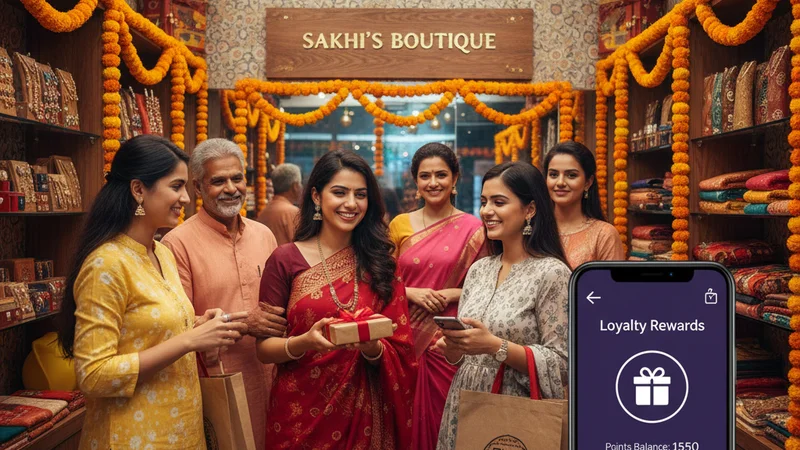
- A Jaipur boutique created a tiered plan for repeat customers, granting early access to upcoming seasonal collections. The program deepened customer loyalty and stimulated referrals.
- A bakery in Pune employed WhatsApp-based loyalty reminders, emailing individualized rewards for festival buys. The merging of convenience of the digital world with emotional engagement drove repeat purchases appreciably.
These instances indicate that small enterprises can use effective growth without budgets of monumental proportions, all by rewarding loyal customers and acknowledging their loyalty.
Tips to get started with loyalty programs
- Start small: Start with a basic points or punch card scheme.
- Communicate plainly: Make sure customers know how to accumulate and cash in on rewards.
- Integrate online: Monitor points through website, app, or LocalShouts (https://www.localshouts.com).
- Celebrate milestones: Call out customer victories or anniversaries to foster connection.
- Gather feedback: Continue to perfect the program based on what's most important to customers.
Conclusion
Loyalty programs are not merely a marketing strategy — they are a sustained approach to establishing brand credibility and customer trust. For Indian small and micro enterprises, loyalty programs encourage repeat purchases, increase emotional bonds, and make customers advocates.
By making programs simple, relevant, and digitally connected through platforms such as LocalShouts (https://www.localshouts.com), small businesses are able to build their presence in-store and online. A loyal customer is not merely a consumer; they are a brand ambassador, a repeat source of income, and a recipe for long-term business success.
Invest in customers today, reward them authentically, and see your brand build through loyalty, trust, and advocacy.
Frequently Asked Questions (FAQs)
1. Why are loyalty programs important for small businesses?
Loyalty programs help retain customers, encourage repeat purchases, and foster trust, which is more cost-effective than acquiring new clients.
2. What types of loyalty programs work best for small businesses?
Simple points systems, punch cards, tiered rewards, referral programs, and personalized perks work well for small enterprises.
3. How can I promote my loyalty program effectively?
Use in-store signage, social media, emails, Google My Business, and platforms like LocalShouts (https://www.localshouts.com) to reach your audience.
4. Can a loyalty program work without a digital presence?
Yes, offline programs work too, but integrating digitally improves tracking, convenience, and scalability.
5. How do I measure the success of my loyalty program?
Track metrics such as repeat purchase rate, retention rate, average order value, engagement, and referrals.
6. Can micro businesses implement loyalty programs on a small budget?
Absolutely. Simple punch cards, points-based rewards, and referral incentives are low-cost yet highly effective strategies.