Introduction
The past few years in India have seen the rise of a powerful movement that is reshaping the experience of eating and thinking about food, known as the farm-to-table dining movement. Originally a trend primarily adopted among urban restaurants, the phenomenon has expanded to small towns and local communities, bringing diners directly in touch with regional farmers and food producers. This farm-to-table approach reflects the most sustainable dining experience, but it also promotes a healthier and fresher meal, boosts local economies, advances sustainability, and restores trust between the food grower and the consumer.
The farm-to-table concept is most fundamentally about authenticity, transparency, and local pride — whether a small café is sourcing vegetables from an organic farm down the road or a restaurant is serving local cheese and spices. The movement is transforming dining into a more flavorful experience — an experience that can be defined as eating well and doing good.
Let’s explore how this movement is spreading across India, its significance, and how local businesses can get involved and succeed with a digital local consumer platform such as LocalShouts (https://www.localshouts.com).
What is Farm-to-Table Dining?
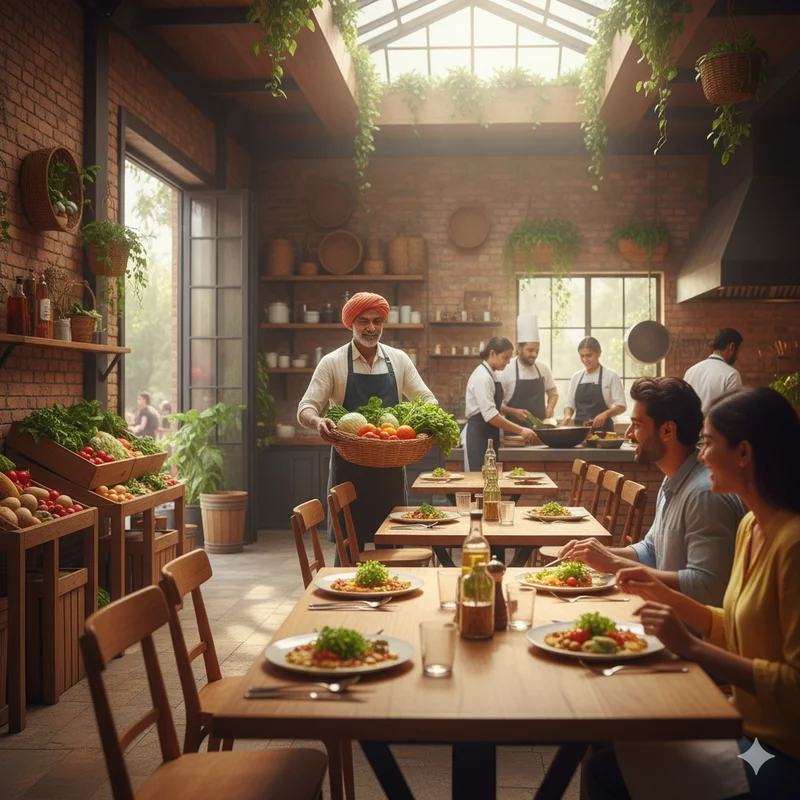
Farm-to-table dining refers to a food system where restaurants and consumers source their ingredients directly from local farms. Instead of relying on long supply chains and bulk distributors, chefs and business owners build relationships with nearby farmers, producers, and artisans.
This approach ensures that:
- Food is fresher and more nutritious, as it travels shorter distances.
- Farmers receive fair prices for their produce.
- Local economies retain more value from food spending.
- Communities develop a closer connection to their food sources.
In India, where agriculture is the backbone of the economy, this concept aligns beautifully with traditional values of self-reliance and seasonal eating.
The Rising Trend of Farm-to-Table in India
1. Understanding Health and Freshness: Today's conscious consumers become increasingly aware of what they are eating. Their goal is food that is chemical-free, organic, and grown naturally. Farm-to-table restaurants represent this need perfectly, as they serve meals made with fresh, locally grown ingredients rather than imported or commercial products.
2. Providing an Opportunity for Local Farmers: Many restaurants are now establishing direct relationships with farmers and small producers, thus removing the middleman. This not only provides farmers with reasonable compensation but also builds trust.
3. Sustainability and the Environment: The closer a food source is to the consumer, the shorter the supply chain, which entails fewer emissions created from transport, and less food waste. This benefits India's own awareness of eco-friendly eating, and sustainable living.
4. Digital Discovery and Local Branding: Local farm-to-table restaurants are discovering new avenues to be found through digital tools like LocalShouts (https://www.localshouts.com). Identifying businesses that are uniquely local and telling that story not only connects the diner to the restaurant but also connects the diner to the local and sustainable food movement.
The Economic Impact on Local Communities
Farm-to-table dining isn’t just good for health — it’s good for the local economy.
Every time a customer dines at a local restaurant sourcing from nearby farms, money circulates within the same community. Farmers gain stable income, restaurants attract loyal customers, and the entire region benefits from a stronger local brand identity.
In smaller towns across India — from Coorg to Nashik to Guwahati — community-based dining has become a way to revive local agriculture and create rural employment opportunities.
Even small digital initiatives, such as featuring these restaurants on LocalShouts, help increase visibility and customer trust through verified listings, photos, and reviews.
Farm-to-Table Success Stories in India
Several inspiring examples highlight how the concept is gaining momentum:
- Café Terra in Pune partners with nearby organic farmers for fresh greens and herbs.
- GreenPath Organic Café in Bengaluru sources produce directly from its own eco-farm.
- Farm Café in Goa has become a tourist favorite for showcasing seasonal local ingredients.
Beyond urban centers, even small eateries in towns like Indore, Dehradun, and Madurai are adopting similar models, proving that sustainability can be profitable when authenticity and local connections lead the way.
How Restaurants Can Adopt a Farm-to-Table Model
1. Build Relationships With Local Farmers
Start by identifying reliable farmers in your area. Visit their farms, understand their growing practices, and establish mutual trust. Even a small collaboration can lead to a consistent supply of high-quality produce.
2. Create Seasonal Menus
Base your menu on what’s fresh and available each season. Seasonal menus not only reduce costs but also highlight the region’s best produce — a true reflection of local flavor.
3. Share the Story Behind the Food
Customers love authenticity. Use your website, social media, or platforms like LocalShouts (https://www.localshouts.com) to tell stories about your farmers, ingredients, and cooking process. Transparency builds strong brand loyalty.
4. Minimize Waste
Plan recipes that use ingredients efficiently. Compost leftover food or partner with food donation drives. Sustainability isn’t just about sourcing — it’s about responsibility.
5. Host Community Events
Organize farm visits, tasting sessions, or local farmer’s markets. This helps diners appreciate the journey from seed to plate and strengthens community relationships.
Digital Tools That Help Farm-to-Table Restaurants Grow
In today’s market, even the most authentic local restaurants need a strong digital presence to attract customers.
Here’s how digital tools can support the farm-to-table movement:
- Google My Business: Helps restaurants appear in local search results and maps.
- LocalShouts (https://www.localshouts.com): Enables small food businesses to showcase their menus, location, and sustainability efforts, making them discoverable by conscious consumers.
- Social Media Marketing: Platforms like Instagram and Facebook are ideal for sharing photos of fresh ingredients, farmer collaborations, and kitchen stories.
- Online Reviews and Testimonials: Positive reviews build credibility and help potential customers trust your brand’s authenticity.
By using these tools effectively, even a small café in a Tier-2 city can attract eco-conscious diners and become a local favorite.
Why Consumers Prefer Farm-to-Table Restaurants
From urban professionals to small-town families, today’s diners want more than just good taste — they want meaning behind their meals.
Here’s what customers value most:
- Transparency: Knowing where their food comes from.
- Community Connection: Supporting local growers and businesses.
- Health Benefits: Fresh, pesticide-free produce.
- Authentic Experience: Real ingredients, honest cooking, and local flavors.
Restaurants that communicate these values openly — through their menus, decor, and digital profiles — naturally earn long-term loyalty and word-of-mouth growth.
Barriers to Implementing the Farm-to-Table Model
Though the positives are clear, some barriers must be addressed:
- Reliability of Supply: Individual small farms may not predictably harvest.
- Higher Cost: Certain organic, or local ingredients may be relatively expensive in certain markets.
- Lack of Awareness: There is still a large customer base who is unaware of the benefits of sourcing local ingredients.
To address these barriers the restaurant may educate its customers using storytelling, its online presence to showcase its sustainability initiatives, and partner with neighboring food producers in order to develop supply chain reliability.
LocalShouts (https://www.localshouts.com) is a platform that assists with this accessibility, and engages and displays a local restaurant legitimacy, all in front of the conscious customer.
The Future of Farm-to-Table Dining in India
The future of farm-to-table dining in India looks bright. As consumers continue to prioritize health, sustainability, and local pride, small and mid-sized businesses have a golden opportunity to lead this movement.
With government initiatives promoting organic farming, startups focusing on agri-tech, and digital ecosystems like LocalShouts helping businesses go online, the farm-to-table ecosystem is evolving into a powerful community-driven network.
Soon, we may see every locality in India boasting at least one restaurant or café that proudly says: “Our food comes from just 10 kilometers away.”
That’s not just marketing — that’s the future of responsible dining.
Conclusion
Farm-to-table dining is more than just a food trend; it is a transition to sustainable practice, transparency, and local empowerment. Farm-to-table dining is about again connecting farmers, chefs, and customers to create a deeper community and ensure each plate carries significance.
For a local restaurant owner, this will mean a commitment to building the level of trust, authentic culture, and growth of the business that will allow sustainability. With new digital tools like LocalShouts (https://www.localshouts.com/) to provide clarity and visibility with a trusted source, establishing your message and visibility to local conscious eaters has never been easier.
As India's local food sector transforms and continues to grow, we know with certainty that the closer we stay to our farms, the better our future dining experience will be.
FAQs
1. What does farm-to-table mean?
Farm-to-table means sourcing ingredients directly from local farmers or producers to ensure freshness, quality, and sustainability.
2. How does farm-to-table help local communities?
It boosts local economies, supports small farmers, reduces carbon emissions, and builds trust between consumers and food producers.
3. Can small restaurants adopt farm-to-table dining?
Yes. Even small eateries can partner with nearby farms, create seasonal menus, and promote their efforts through online platforms like LocalShouts.
4. Is farm-to-table dining more expensive?
Initially, it may cost slightly more, but long-term benefits include better quality, loyal customers, and reduced waste.
5. How can I find farm-to-table restaurants near me?
You can search online on directories like LocalShouts (https://www.localshouts.com) or Google Maps using keywords such as “farm-to-table restaurant near me.”
6. What are the main challenges for farm-to-table restaurants?
Supply consistency, cost management, and customer awareness are key challenges — but digital tools and collaborations help overcome them.