Introduction
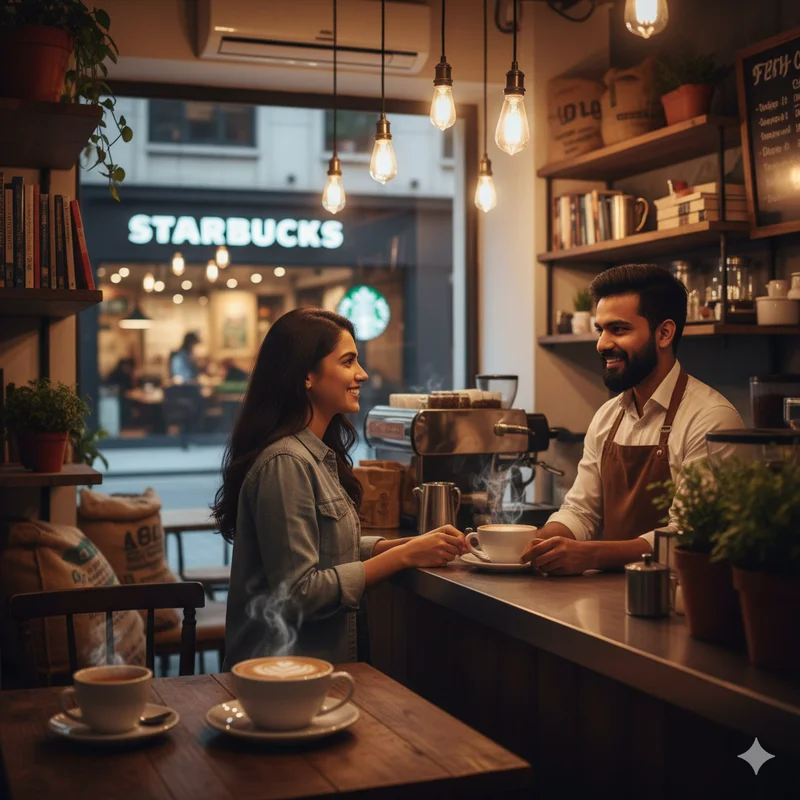
While Starbucks has turned coffee into a global empire, local coffee shops all over the world — including in India — are rebuilding coffee culture quietly, but surely. The customers who once waited in line at Starbucks are now finding their way to the nearby coffee shop that offers something more personal, more authentic and more communal.
It’s not just about the caffeine, it’s about community, craft, and character. National chains contrive a standardized experience, while local coffee shops humanize them.
Let’s take a look at why local cafes are stealing the hearts (and taste buds) of former Starbucks enthusiasts — and what lessons could cafe owners take from this.
1. Authentic Atmosphere Over Corporate Uniformity
When you walk into a Starbucks, you know exactly what you’ll get — familiar interiors, predictable playlists, and the same paper cup. While this consistency feels safe, it also feels… impersonal.
Local cafés, on the other hand, have something Starbucks can’t mass-produce — authentic charm.
- Walls decorated with local art.
- Music chosen by the owner, not an algorithm.
- Tables where regulars actually know each other’s names.
These unique touches turn local cafés into living parts of their neighborhoods, not just coffee stops.
Example:
In Pune’s Koregaon Park, Third Wave Coffee Roasters began as a single café focused on handcrafted brews and cozy design. Its authentic indie vibe made it more than a coffee shop — it became a culture hub for freelancers and creatives.
2. Artisan Quality and Taste Trump Mass Produced
Starbucks is also exceptionally efficient, turning out millions of the same cup of coffee. But for the passionate coffee drinker of today, quality and imagination craft experience beyond what large scale production can provide.
Local coffee shops are trying new techniques with beans, roasts and infusions - from pour-over to AeroPress - looking to have a different experience observers cannot get from a factory assembled cup of coffee.
They often purchase beans from local farmers or fair-trade farms, promise to roast in-house, and pride themselves with every cup served. And the result is coffee that has a story.
Pro-tip:
Tell your sourcing story. A simple note on a chalkboard that explains today’s beans are “handpicked beans from Coorg’s rain-fed farms” gives consumers an additional level of emotional and sensory value.
3. Personal Connection Trumps Transactional Customer Service
Starbucks trains their baristas to be efficient; “smile, swipe, next,” just like an order taker. However, in a local coffee shop, the barista might remember your first name, will know your usual drink orders, and might even remember the last time you were in, and what you were talking about, almost like a counselling session.
And there is value in connection.
Oftentimes, people are not just going in for a break or for a great cup of coffee, but rather to have a friendly conversation and feel comfortable while enjoying their cup of coffee.
Example:
A café in Bengaluru began a Customer of the Week board that showcased regular's photos and their favorite drinks every week. That simple board created far more loyalty in the community than any rewards app would ever manage to foster.
4. Local Cafés Reflect the Community’s Soul
Local coffee shops often double as cultural spaces — hosting open mics, art exhibitions, or weekend workshops. This gives them a purpose beyond profit.
By reflecting their neighborhood’s voice, they become spaces of belonging — where ideas, friendships, and creativity brew alongside coffee.
Example:
In Delhi’s Hauz Khas Village, The Brew Room partners with local artists and NGOs to host poetry nights and sustainability drives — turning caffeine into community engagement.
5. Sustainability and Conscious Choices Matter
Modern coffee drinkers are increasingly eco-conscious. Starbucks has sustainability programs, but local cafés often act faster and with more authenticity.
- Reusable mugs and metal straws
- Locally sourced ingredients
- Compostable packaging
- Support for local farmers
Customers see these not as marketing claims, but as real ethical choices. Supporting local cafés feels like supporting a greener planet — and that emotional satisfaction builds loyalty.
6. Quality Over Quantity
Starbucks excels at serving millions quickly. Local cafés focus on quality over scale — smaller batches, fresher beans, and creative brewing.
Every cup tastes slightly different — and that’s the charm. Customers value the idea that their drink was crafted, not produced.
Example:
A café in Hyderabad started using a manual grinder and slow pour method. Their customers often wait longer but swear the flavor is worth every minute — turning “waiting time” into part of the ritual.
7. Supporting Local Feels Good
Post-pandemic, people are more intentional about where they spend money. Buying from a local café feels like an act of contribution — helping a dream grow instead of adding to a corporation’s quarterly report.
Local café owners are part of the community — attending the same schools, temples, and markets. Their success is personal to the people around them.
Tip for café owners:
Share your origin story. Tell customers how and why your café began. That personal narrative creates emotional investment far deeper than any loyalty card.
8. Creative Menus and Regional Twists
Starbucks may offer “Pumpkin Spice Lattes,” but local cafés win with regional flair — filter coffee, cardamom-infused brews, jaggery-sweetened lattes, or desi cold brews.
These creative touches resonate with local taste buds while giving customers something they can’t find anywhere else.
Example:
In Chennai, a café serves South Indian cold brew with coconut milk. It’s a local twist that delights tourists and locals alike — and instantly differentiates them from global chains.
9. Affordability With Value
Let’s face it — Starbucks is expensive. Many customers have realized they can get better-tasting coffee and friendlier service for half the price at their neighborhood café.
Local cafés prove that premium doesn’t always mean pricey. They offer affordability without compromising experience.
And for young professionals or students, that combination is irresistible.
10. Social Media Gives Local Cafés Global Reach
Thanks to Instagram and Google Maps, even the smallest café can gain massive visibility.
Aesthetic interiors, latte art, or behind-the-scenes reels can turn a quiet corner café into a viral destination.
With the right digital strategy — consistent posting, good photography, and engagement on Google My Business — local cafés can rival Starbucks in online buzz without spending crores on ads.
Pro Tip:
Encourage customers to tag your café. A single viral post can bring in hundreds of new visitors.
11. Coffee With a Cause
Starbucks promotes global causes, but local cafés are winning by supporting hyperlocal causes — school drives, plastic-free campaigns, animal rescues, or mental health initiatives.
These efforts make people feel part of a shared purpose. Customers aren’t just buying coffee; they’re participating in change.
Example:
A café in Goa donates ₹10 from every cappuccino sold to a beach-cleaning project. Customers proudly post about it — boosting both awareness and brand loyalty.
12. Comfort in Familiar Faces
In an age of self-checkout machines and corporate branding, there’s a growing longing for familiar human experiences.
Local cafés deliver that warmth — recognizing faces, asking about your day, and remembering how you like your brew.
That sense of “home away from home” is something no multinational can copy.
Conclusion
The uptick in local cafes isn't a result of an uprising against Starbucks, it is about a return to authenticity.
What people are rallying around is craving connection, creativity, and community over convenience. Local coffee shops win because they take the opportunity to create meaning with every single cup — experience handbrew, with care, experience layout with heart in mind, and experience infused through local culture.
As shoppers become more intentional and conscious of their purchases, they realize one simple thing — drinking great coffee is not about a brand, it represents love.
So when you choose to step out of line at Starbucks to support your local café - you aren’t buying a cup of coffee, but the story it represents.
FAQs
1. Why are people going to café shops rather than Starbucks?
Because café shops usually provide an experience, relationship and are typically not as expensive, where a chain does not provide the same factors.
2. Are café shops better quality than Starbucks?
Most café shops use better quality and freshly roasted beans, and brew coffee with care, providing the drinker with much more complex flavors.
3. How do café shops create loyal customers?
Friendly baristas combined with unique narrative storytelling of the café and customer relationships during events or other social experiences creates loyal customers.
4. Are small coffee shops cheaper than Starbucks?
Yes. Most tea/coffee outlets serve quality beverages with reasonable prices because their shops are not supported by a Starbucks-like environment in the price of the drink.
5. Can small cafés compete with Starbucks' marketing?
Surely. Local cafés can use social media sites and Google My Business to create local visibility, and word-of-mouth marketing along with relationships retain loyalty.
6. What will happen to local coffee culture?
Local coffee culture will retain growth. Consumers or potential consumers are looking for authenticity, sustainability, experience, and local engagement instead of labels.