For many small shops in India, the rise of e-commerce giants like Amazon and Flipkart seems like an impossible challenge. The convenience of online shopping, fast delivery, and wide product variety makes it tempting for customers to bypass local stores.
Yet, not all small businesses are doomed. This is the story of Suresh’s Electronics, a small shop in Pune, and how it successfully competed with Amazon by combining digital tools, local strategies, and personal service.
The Challenge
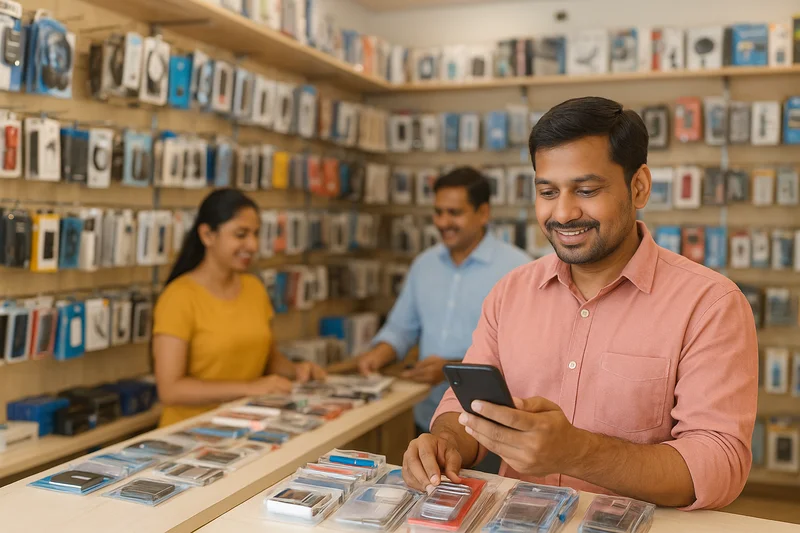
Suresh had been running his small electronics shop for over 12 years, selling mobile accessories, chargers, and small gadgets. He faced several challenges as Amazon gained popularity:
- Customers Buying Online: Many buyers preferred ordering online for cheaper prices and home delivery.
- Price Competition: Competing on price alone with Amazon was impossible
- Limited Visibility: People moving into the area often didn’t know about his store.
- No Digital Presence: The shop had no website or social media page.
Suresh realized that he needed a strategy to retain existing customers while attracting new ones.
The Solution: Combining Local Strengths with Digital Tools
Rather than trying to beat Amazon on price, Suresh focused on areas where a local shop has an advantage: convenience, personal service, trust, and speed.
1. Creating a Digital Presence
- Listed the shop on Google Business Profile with address, hours, phone number, and photos.
- Uploaded images of products and the shop interior to increase trust.
- Linked the business with LocalShouts (https://www.localshouts.com) to improve local discoverability.
2. Using WhatsApp for Orders
- Allowed customers to order products via WhatsApp.
- Shared catalogs, product availability, and quick updates about new stock.
3. Personalized Customer Service
- Offered advice on products, troubleshooting, and device setup—services Amazon cannot provide in person.
- Delivered products to nearby customers on the same day, matching Amazon’s convenience for local buyers.
4. Community Engagement
- Partnered with local apartment complexes and offices to provide exclusive offers.
- Encouraged word-of-mouth referrals by giving small loyalty discounts.
5. Promotions and Updates Online
- Posted product highlights, offers, and tech tips on social media and LocalShouts.
- Ran seasonal promotions like “Back-to-School” or “Festive Discounts” to attract attention.
The Results
Within a few months, Suresh saw measurable improvements:
- Increased Footfall: New customers found the shop online through Google and LocalShouts.
- Higher Sales: Regular customers bought more because they could easily check stock and place orders online.
- Customer Loyalty: Personalized service encouraged repeat business.
- Competitive Edge: Same-day delivery for local orders and in-person advice helped compete with Amazon’s convenience.
- Community Recognition: The shop became known as a reliable, friendly electronics provider in the neighborhood.
Suresh realized that digital presence + personal service = a winning combination.
Why This Strategy Works for Local Shops
Local Knowledge Matters
- Understanding the neighborhood, customer preferences, and local demand gives small shops an advantage.
Speed and Convenience
- Immediate assistance, easy returns, and local delivery are areas where Amazon cannot always match small businesses.
Trust and Relationships
- Customers value personalized interactions, advice, and familiarity—something online marketplaces cannot replicate.
Affordable Digital Marketing
- Using tools like Google Business Profile, LocalShouts (https://www.localshouts.com), WhatsApp, and social media allows small shops to reach customers with minimal cost.
Adaptability
- Small businesses can quickly adjust stock, promotions, or services based on immediate feedback from customers.
Step-by-Step Guide for Local Businesses
Small businesses wanting to compete with e-commerce giants can learn from Suresh’s approach:
Step 1: Claim Your Local Listings
- Google Business Profile and LocalShouts (https://www.localshouts.com) are essential for local visibility.
Step 2: Showcase Your Products Online
- Use WhatsApp, social media, and photos to let customers know what you have in stock.
Step 3: Offer Personalized Services
- Help customers choose products, provide demonstrations, and troubleshoot issues.
Step 4: Enable Local Delivery
- Fast, same-day delivery within a few kilometers can match Amazon’s convenience.
Step 5: Engage the Community
- Partner with local offices, schools, and residential complexes.
- Encourage referrals and loyalty programs.
Step 6: Maintain Consistency
- Keep online listings, photos, and service updates accurate.
- Regularly post promotions or product updates to attract attention.
Lessons Learned
Suresh’s journey shows that small businesses don’t have to compete with Amazon solely on price. Instead, success comes from:
- Leveraging digital tools for local discovery.
- Focusing on personalized service and trust.
- Using community connections to build loyalty.
- Combining online visibility and offline excellence to create a holistic customer experience.
Even a small shop can thrive in the age of e-commerce by focusing on these strengths.
Conclusion
The story of Suresh’s Electronics is a powerful example of how small local businesses in India can compete with large online marketplaces. By combining a simple online presence on platforms like LocalShouts (https://www.localshouts.com), Google Business Profile, and WhatsApp with personalized service, community engagement, and fast local delivery, Suresh not only retained existing customers but also attracted new ones.
Small business owners can take inspiration from this story—it proves that with the right strategy, even a local shop can stand out in a digital world dominated by e-commerce giants.
FAQs
1. Can a small local shop really compete with Amazon?
Yes. By leveraging local SEO, personalized service, and fast local delivery, small shops can retain and grow their customer base.
2. What digital tools are most effective?
Google Business Profile, LocalShouts (https://www.localshouts.com), WhatsApp Business, and social media are cost-effective and powerful.
3. Should I focus on price or service?
Service, trust, and convenience often matter more than price for local customers.
4. How can I reach new customers online?
List your business on Google, LocalShouts, and social media; post photos, and share offers.
5. Do I need a website to compete with Amazon?
Not immediately. A strong local listing and WhatsApp orders can be enough to start.
6. How can I encourage repeat customers?
Offer loyalty discounts, personalized recommendations, and excellent customer service to build long-term relationships.