Introduction
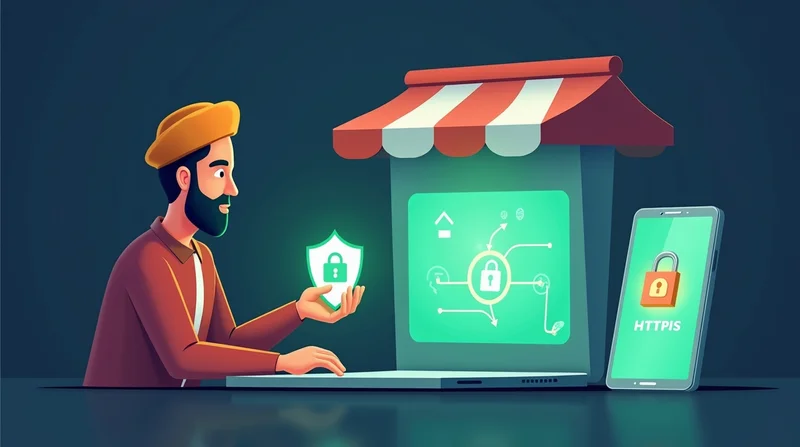
To small and microbusiness owners in India, a website is not just a web address—it is your digital storefront. If you have a bakery in Pune, a fashion boutique in Jaipur, or a tuition center in Lucknow, your website is where customers discover what services you offer and send inquiries or pay online. Just like your physical storefront needs locks and shutters for security, your website needs security as well.
Many small business owners think that hackers only target large businesses, but small sites are actually easier targets simply because small businesses do not invest in security. A hacked site can lead to loss of customers, stolen data, or financial fraud. The good news is that you do not have to spend lakhs of rupees to protect your website. There are simple and inexpensive measures you can take to protect your business online.
This article offers actionable measures for website security specific to microbusinesses in India: straightforward, inexpensive, and effective!
Why Website Security Matters for Small Businesses
- Protects customer trust: If your site is hacked, customers may never return.
- Keeps your data safe: From order details to contact forms, your data must remain private.
- Prevents financial fraud: Hackers can misuse payment gateways if not secured.
- Improves Google ranking: Secure websites with HTTPS rank better in search results.
- Saves repair costs: Prevention is always cheaper than fixing a hacked site.
Essential Website Security Tips for Microbusiness Owners
1. Use Strong Passwords Everywhere
- Never use simple passwords like 12345 or your shop name.
- Combine uppercase, lowercase, numbers, and symbols.
- Change passwords regularly, especially for your admin panel and email.
2. Enable SSL Certificate (HTTPS)
- SSL ensures your website has a small padlock symbol in the browser.
- It protects customer data (like phone numbers and payment info).
- Many hosting providers offer SSL for free or at a low annual fee (₹500–₹2,000).
3. Keep Software and Plugins Updated
- If you use WordPress or any CMS, update themes and plugins often.
- Old versions are the easiest way hackers break in.
- Delete unused plugins to reduce risks.
4. Backup Your Website Regularly
- Take weekly or monthly backups of your site.
- Store backups safely—either on your hosting account, cloud storage, or an external drive.
- If something goes wrong, you can restore your site in minutes.
5. Limit Admin Access
- Only give website access to people who really need it.
- Create separate accounts for team members instead of sharing one password.
- Remove old or inactive accounts.
6. Use Secure Wi-Fi for Updates
- Avoid updating your website from public Wi-Fi (cafes, airports).
- Hackers can steal login details from unsecured networks.
7. Install a Firewall and Security Plugin
- A firewall blocks suspicious traffic before it reaches your site.
- Free or low-cost security plugins (like Wordfence for WordPress) can protect you automatically.
8. Protect Your Contact and Order Forms
- Use CAPTCHA (like “I am not a robot” checks) to prevent spam.
- Ensure customer data submitted through forms is encrypted.
9. Monitor Your Website Regularly
- Check your site often for broken links, fake pages, or strange pop-ups.
- Set up alerts for login attempts or unusual activity.
10. Educate Your Team
- Train employees not to click suspicious links or emails pretending to be from banks or hosting companies.
- Simple awareness can prevent major risks.
How Much Does Website Security Cost?
Many small business owners fear security will be too expensive. In reality:
- SSL certificate: Free – ₹2,000 per year.
- Backups: Often included in hosting, or ₹1,000–₹3,000 annually.
- Security plugins: Free to ₹5,000 yearly.
- Professional help: Optional, only needed if your website handles large payments.
For most microbusinesses, ₹3,000–₹7,000 per year is enough to keep a website secure.
How LocalShouts Helps Small Businesses Stay Safe Online
Not every small business owner has the time or technical knowledge to manage website security. That’s why platforms like LocalShouts (https://www.localshouts.com) make things simple.
LocalShouts provides:
- Websites that are already secure with SSL.
- Regular updates and maintenance to reduce risks.
- Easy-to-manage websites without complicated coding.
- Affordable packages designed for Indian microbusinesses.
This means you can focus on running your shop while LocalShouts ensures your website is safe.
Conclusion
Your website is the digital equivalent to your storefront, and similar to a physical store, your site needs its strong protection. Security is not just for large businesses, but is also very important for local shops, service providers, and microbusinesses. Many businesses can take basic steps including: just using strong passwords, activating, SSL, regularly updating, and regularly backing up your site; to help prevent net-based threats. Even the smallest of businesses can create a secure and professional online presence with the help of partner services like LocalShouts (https://www.localshouts.com), and be very cost effective. Security is not an option on your website; it’s a responsibility to your customers, and to your business as well.
FAQs
- Do small websites actually face hacking threats? Yes, hackers often choose small websites because they are easier to exploit.
- What is the least expensive way to secure my website? Start with an SSL certificate, some strong passwords, and regularly updating—most things cost little or nothing.
- How often should I back up my website? Backing up my website weekly is best, but monthly is adequate for a site that does not change much.
- Do I need an IT expert to secure my website? Not always, with relatively affordable tools and platforms like LocalShouts, you can do some basic security for small websites.
- What happens if my website is hacked? You may lose customer trust, have your data stolen or face the reality of Google blacklisting your website.
- Is website security a positive factor in my Google ranking? Yes, websites that are secure and use HTTPS and clean code will be favored by ranking engines.