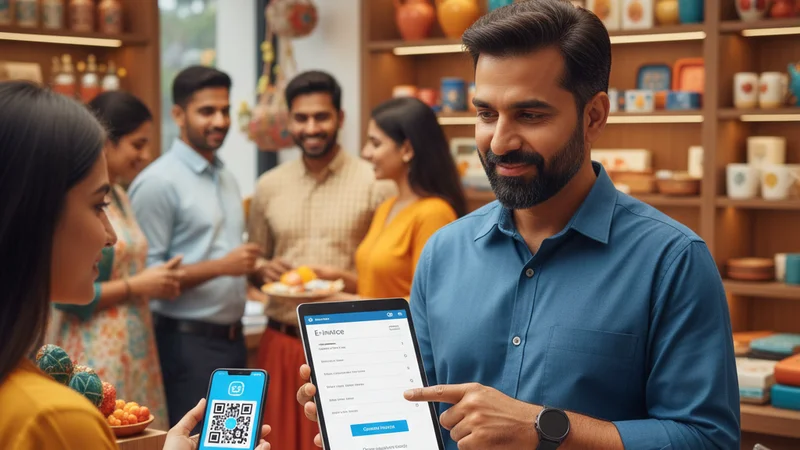
Introduction
Efficiency is the key to success in today's fast-paced business environment, particularly for small and micro businesses in India that frequently deal with tight budgets, a shortage of employees, and growing competition. E-invoicing is one of the best strategies to increase accuracy and streamline financial management.
Electronic invoicing, or e-invoicing, is a digital solution that can revolutionize the way small businesses manage transactions, taxes, and customer relations. It is more than just a paperless billing method. You can reduce administrative burdens, guarantee accuracy, expedite payments, and comply with GST regulations by creating invoices online.
Making the switch to e-invoicing isn't just about going digital for local business owners, shop owners, service providers, and freelancers; it's also about taking back control, saving time, and enabling expansion. In order to manage your company's presence and increase visibility, we'll look at how e-invoicing saves time and money, why it's becoming so important in India, and how to quickly implement it with tools like LocalShouts (https://www.localshouts.com).
What is E-Invoicing and How Does It Work?
E-invoicing is the process of creating, exchanging, and storing invoices in a digital format that is approved by the government. It is connected to the GST system in India, guaranteeing that every invoice is verified by the GST Network (GSTN) and given a distinct Invoice Reference Number (IRN).
Here’s how the process typically works:
- The seller generates an invoice using accounting software or a billing app.
- The invoice data is uploaded to the Invoice Registration Portal (IRP).
- The IRP validates the details, assigns an IRN, and returns a QR code.
- The validated invoice is then sent to the buyer and automatically updated in the GST system.
This entire process happens digitally—often within seconds—removing the need for manual entry, paper records, and repetitive tax filing tasks.
Why E-Invoicing Matters for Small Businesses in India
E-invoicing may initially appear to be a system intended for large businesses. However, small and medium-sized businesses also find it extremely relevant due to the government's gradual rollout and threshold-based adoption.
In fact, many small business owners who’ve switched to digital invoicing report:
- Fewer billing errors
- Faster customer payments
- Easier GST returns filing
- Reduced stationery and printing costs
- Improved financial transparency
You make your company more reputable, professional, and efficient by incorporating e-invoicing into your everyday operations. This makes you stand out both online and offline.
Key Benefits of E-Invoicing for Small Businesses
Let’s explore the biggest advantages that e-invoicing brings to small business owners and local entrepreneurs in India.
1. Time Savings through Automation
Traditional invoicing involves several manual steps—creating invoices in Excel, printing them, sending copies, and following up for payments. E-invoicing automates all of these tasks. Once set up, you can generate invoices in seconds, automatically share them with customers, and sync data directly with your accounting and GST systems.
This automation means less time spent on repetitive work and more time to focus on growth, sales, and customer service.
2. Cost Reduction and Paperless Operations
Paper invoices might seem cheap, but printing, couriering, and storing physical copies add up. E-invoicing eliminates these hidden expenses. You save money on:
- Paper and ink
- Courier and postage
- Manual labor and bookkeeping
- Storage and retrieval
Over a year, these small savings can make a noticeable difference for small businesses, especially for those handling dozens of invoices every week.
3. Faster Payments and Better Cash Flow
Delayed payments are one of the biggest challenges faced by local shops and micro businesses. With e-invoicing, invoices are sent instantly, with digital verification and clear details—reducing disputes and speeding up customer responses.
In addition, many e-invoice systems integrate directly with digital payment gateways, allowing customers to pay immediately. This smoother process leads to better cash flow and less stress.
4. Error Reduction and Data Accuracy
Human error is common in manual billing—wrong GST numbers, mismatched amounts, or missing entries can lead to penalties or delayed filing. E-invoicing systems automatically validate details and catch inconsistencies before submission, helping you maintain compliance effortlessly.
5. Easier GST Compliance
E-invoicing is directly connected to the GST Network (GSTN). This means your invoices are automatically validated and stored for tax filing, eliminating the need for re-entering data. It also ensures transparency and simplifies returns filing, making your accountant’s job easier.
6. Professionalism and Brand Trust
Customers and clients perceive digital invoices as a sign of professionalism. A neatly formatted e-invoice with your logo, business name, and digital signature makes your brand appear more reliable and organized. Platforms like LocalShouts (https://www.localshouts.com) can further enhance your online credibility by showcasing your verified local business profile.
How E-Invoicing Saves Money in the Long Run
The savings from e-invoicing aren’t just about paper costs—they include indirect benefits too.
- Reduced Labor Costs: With automation, you don’t need to hire additional staff to handle billing and filing.
- Lower Error-Related Losses: Mistakes in manual billing can lead to fines, late fees, or GST mismatches. E-invoicing prevents that.
- Faster Business Decisions: With accurate real-time data, you can track sales trends and plan expenses more efficiently.
- Improved Tax Credits: Accurate e-invoicing ensures your input tax credits are automatically updated, reducing unnecessary tax payments.
When you calculate these savings over a year, even small local businesses can notice significant improvement in profit margins.
The Role of Digital Platforms like LocalShouts
While e-invoicing helps streamline financial operations, platforms like LocalShouts (https://www.localshouts.com) empower small businesses to build a strong online identity.
Here’s how both work together:
- You can use LocalShouts to list your business, create a local profile, and connect with nearby customers.
- When paired with e-invoicing, you gain both visibility and efficiency—a perfect mix for growth.
- Customers can discover your verified LocalShouts profile, place orders, and receive instant digital invoices—creating a seamless customer experience.
This combination of digital presence and smart financial management ensures your business stays modern, trustworthy, and competitive.
Practical Steps to Implement E-Invoicing for Your Business
If you’re ready to start e-invoicing, here’s a simple guide to get going:
1. Check Eligibility
Currently, e-invoicing is mandatory for businesses with a certain annual turnover as defined by the GST Council. However, even if you’re below the threshold, you can still adopt it voluntarily for efficiency.
2. Choose the Right Software
Select a GST-compliant accounting or invoicing software. Many affordable Indian tools like Zoho Books, Vyapar, Tally, and Marg ERP offer e-invoicing integration.
3. Register on the GST Portal
To generate IRNs, you’ll need to register your business on the Invoice Registration Portal (IRP).
4. Generate Your First E-Invoice
Enter details like buyer GSTIN, item description, quantity, and value. The system will validate the details, assign an IRN, and generate a QR code.
5. Send and Store Digitally
Once validated, you can email the invoice to your customer. The data automatically reflects in your GST returns, reducing manual work.
6. Integrate Payments and Accounting
For smoother operations, integrate your e-invoice system with your payment gateway and accounting platform. This ensures automatic reconciliation and cleaner financial records.
Common Myths About E-Invoicing
Myth 1: It’s Only for Big Companies
Not true. While it started with larger firms, e-invoicing tools today are affordable and simple enough for even small shops and freelancers.
Myth 2: It’s Complicated to Set Up
Most e-invoicing tools in India are user-friendly and require minimal training. Many even come with local language support.
Myth 3: It Requires High Technical Knowledge
If you can use WhatsApp or UPI, you can use e-invoicing software. The process is mostly automated.
Myth 4: Paper Invoices Are Safer
Digital invoices are actually safer—they’re encrypted, stored in the cloud, and cannot be misplaced or damaged.
The Future of E-Invoicing in India
E-invoicing will only increase as a result of India's efforts to create a more transparent tax system and a "Digital India." The smooth integration of digital payments, GST filing, and e-invoicing will soon benefit even small and micro businesses.
Early adoption of e-invoicing puts your company in a position to meet future compliance regulations and customer expectations.
In this digital ecosystem, platforms like LocalShouts (https://www.localshouts.com) will remain crucial in assisting small businesses in remaining visible, connected, and credible.
Conclusion
E-invoicing is a wise business decision as well as a technological advancement. It signifies a change toward quicker payments, improved financial management, and long-term expansion for India's small and microbusinesses.
Using e-invoicing gives you a more polished appearance to your clients while saving time, cutting costs, and simplifying compliance. Your company will not only survive but flourish in the contemporary digital marketplace if you combine this with digital tools and visibility platforms like LocalShouts (https://www.localshouts.com).
It's time to embrace the efficiency of digital invoicing and get rid of the chaos caused by paper bills.
FAQs
1. What is e-invoicing and who needs it?
E-invoicing is a system where invoices are generated and authenticated electronically through the GST Network. Businesses with a specific turnover threshold must follow it, but even smaller ones can benefit from adopting it.
2. How does e-invoicing help small businesses save money?
It eliminates paper, printing, and courier costs while reducing human errors and compliance delays that could lead to penalties.
3. Is e-invoicing difficult to implement?
Not at all. With modern software and online tools, setting up e-invoicing is simple and takes just a few minutes.
4. Does e-invoicing improve customer experience?
Yes. Customers receive instant, accurate invoices with secure payment links, creating a smoother and more professional buying experience.
5. What happens if a business doesn’t follow e-invoicing rules?
If e-invoicing is mandatory for your turnover and you fail to comply, the invoice becomes invalid under GST law.
6. Can LocalShouts help me manage my business digitally?
Absolutely! LocalShouts (https://www.localshouts.com) helps you create an online profile, reach new local customers, and integrate digital tools that complement your e-invoicing system.