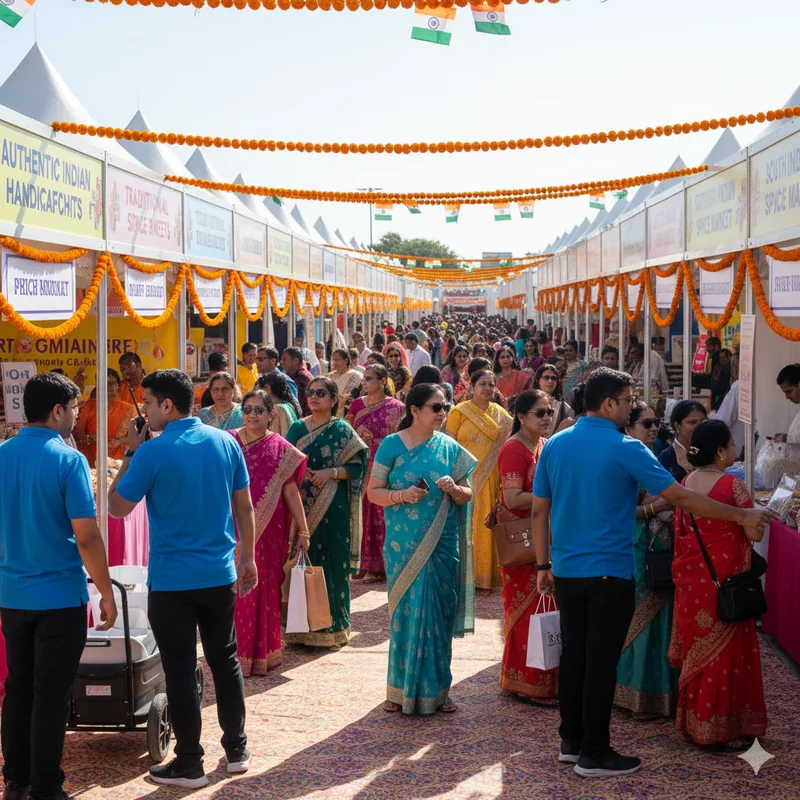
Introduction
Successful events, whether an exhibition or a business meetup, can only happen as a result of productive management on-ground. Although online promotion and registrations are very important, the real proof of a successful event is whether or not there was smooth management of the coordination on-ground. On-ground operational management of an event means that every member of your team, every vendor, every participant and visitor is being taken care of efficiently and effectively which creates a high-quality, organized event experience.
In India, small and micro businesses are also starting to hold events locally as a way to get their products out there, to build relationships and engage with their community. The best of events can quickly become chaotic if they are not properly planned and operationally managed. It's important to understand operations on-ground. Whether it be a trade fair in your small town, a food festival, or a skill-building workshop, you can see how learning to manage the operations properly will make a difference. There are now some amazing new platforms, like LocalShouts (https://www.localshouts.com) to help local organizers effectively plan, promote and execute community events.
Let’s take a look at how as an event organizer you can manage on-ground operations like a pro and create experiences that are memorable, and reflect your brand’s professionalism and care.
Understanding On-Ground Event Operations
On-ground event operations refer to all the physical arrangements, coordination, and real-time management activities that happen during an event. These operations include venue setup, vendor management, staff coordination, logistics, crowd control, audio-visual support, and on-site troubleshooting.
Think of it as the engine room of your event. Everything that attendees see, feel, or experience—from the moment they enter the venue to the time they leave—depends on how efficiently your operations are handled.
For small business owners and local entrepreneurs, mastering this area not only ensures customer satisfaction but also enhances brand credibility and future event turnout.
Step 1: Develop a Complete Event Operations Plan
Good on-the-ground management practices hinge on pre-event planning. By the time you hit event day, you will want a comprehensive operations plan identifying in detail every facet of execution.
Your plan should cover:
- Event Goals: What do you want to accomplish—sales leads, awareness, partnerships, or brand awareness?
- Operational Assignments: What does each team member have responsibility for—logistics, registration, security, catering, etc.
- Vendor Information: Have a list of all vendors including their contact numbers and payment arrangements.
- Schedule of Events: Development of a detailed minute-by-minute schedule for each event (setup, execution, wrap up).
- Emergency Plans: Have contingency plan actions prior to the event for things like medical emergencies, adverse weather, malfunctioning equipment, etc.
A solid operations plan helps avoid chaos if things in your logistics unravel. Once everybody knows their roles, your event is likely to run what I refer to as smoothly despite hiccups.
Step 2: Build the Right Team and Delegate Smartly
No event can succeed without a dependable on-ground team. Building a skilled crew and delegating tasks effectively reduces stress and ensures accountability.
Your team should ideally include:
- Event coordinator: Oversees overall execution.
- Stage manager: Handles performances, presentations, and timings.
- Vendor liaison: Manages communication with suppliers and service providers.
- Guest relations: Welcomes attendees and addresses inquiries.
- Technical support: Handles lighting, sound, and multimedia equipment.
- Security and safety officer: Ensures safety compliance and crowd control.
Assigning each person a clear role ensures that no task is overlooked and everyone knows exactly what’s expected of them.
Platforms like LocalShouts (https://www.localshouts.com) can also connect you with local event professionals and volunteers who specialize in managing different aspects of on-ground execution.
Step 3: Organize Logistics and Venue Setup
Logistics are an important aspect of on-ground operations. Positioning of stalls, seating, lighting, sound systems, signboards, directional signage all contribute to the overall experience for visitors.
Here are some tips for coordinating your logistics:
- Map out your venue: Getting a visual layout of your venue, including all entries and exits, washrooms, stalls, and activity areas is a great start.
- Schedule deliveries in advance: Be sure all vendors deliver their equipment and materials to the venue the day before or sooner, if possible.
- Double-check your power supply and plan backup: Nothing can close an event down faster than a power outage. Have generators and/or battery packs ready.
- Set out user-friendly signage: Clear banners and boards will help orient the needs of your exhibitors or your visitors around the venue.
- Conduct safety checks: Check that your electrical wiring is safe, fire exits are clear, and first aid kits are stocked.
Excellent logistics organizing will contribute greatly to a smooth and professional event experience.
Step 4: Streamline Registration and Entry Management
Long queues and confusion at the entrance can create frustration and delay the start of your event. A streamlined check-in process ensures your guests feel welcomed and valued.
- Use QR code tickets or mobile check-ins for faster verification.
- Set up separate counters for pre-registered and on-spot registrations.
- Train staff to handle digital devices and manage queues politely.
- Keep a help desk near the entrance for assistance and information.
By planning the entry flow, you make a strong first impression and reduce unnecessary stress for both guests and your team.
Step 5: Manage Vendors and Partners Efficiently
Vendors and partners form an essential part of most events—be it food stalls, decor suppliers, or tech providers. Managing them well ensures everything runs as scheduled.
- Confirm vendor timings and responsibilities a week before the event.
- Conduct a vendor meeting on-site to review layout and logistics.
- Keep payment and contract details documented.
- Inspect setup quality before gates open.
- Assign one team member as the vendor point-of-contact.
This proactive approach ensures timely delivery and reduces last-minute surprises that could disrupt the event.
Step 6: Ensure Real-Time Communication and Coordination
On-ground communication must be clear, quick, and organized. Walkie-talkies, group chats, or dedicated communication apps help team members coordinate instantly.
Tips for smooth communication:
- Have a central command point where the event head stays.
- Use short, direct messages to convey updates or alerts.
- Maintain a real-time checklist of ongoing and completed tasks.
- Schedule brief check-ins every hour with key team leads.
When your team communicates efficiently, it allows for quick problem-solving and smoother execution of every activity.
Step 7: Handle Crowd Control and Safety Measures
Crowd management is vital for any public or semi-public event. It ensures comfort, safety, and order throughout the day.
- Place barricades and floor markers to guide visitor movement.
- Hire trained security personnel to monitor high-traffic areas.
- Install CCTV cameras for better oversight.
- Keep medical staff on-site with basic first aid and emergency contacts.
- Brief your team about evacuation plans and safety protocols.
By prioritizing safety, you not only protect attendees but also boost your reputation as a responsible organizer.
Step 8: Handle Stage and Program Flow
For events that involve a live session, performance, or product launch, an emphasis is placed on stage management. A great stage program that runs smoothly will help keep things on time and allow well-being to enhance.
- Get your run sheet together with every activity, time, and who is responsible for it.
- Have an opportunity to rehearse before your event starts.
- Have backup microphones, lights, or presentation devices ready to go.
- Use a stage manager headset or communication device to maintain relationships with other divisions.
- Keeping the timeline will help build confidence and will keep your audience engaged from beginning to end.
Step 9: Capture Real Time Feedback and Monitor Issues
- The best event producers do not wait until the end to find out about issues.
- They monitor in real time.
- Have one or two staff able to walk the venue taking notes of attendee feedback.
- Have feedback stations as short digital surveys.
- Have your staff able to solve problems under a complaint desk, or help center.
Encourage your staff to notify complete staff of any operational issues or critical situations as soon as possible.
Not only is this type of feedback helpful to improve the current event, but it will help with next time calculations as well.
Step 10: Wrap-Up and Post-Event Coordination
Once the event concludes, your operations aren’t over yet. Post-event management is equally important to ensure a clean closure and valuable reflection.
- Supervise vendor dismantling and venue cleanup.
- Conduct a team debrief to discuss what worked well and what didn’t.
- Review attendance data, expenses, and feedback forms.
- Send thank-you notes to vendors, partners, and attendees.
- Post event highlights and photos on social media and platforms like LocalShouts (https://www.localshouts.com) to showcase your success.
This final step solidifies relationships, builds credibility, and sets a foundation for your next big event.
How LocalShouts Can Assist You with Your Ground Events
LocalShouts (https://www.localshouts.com) is more than just an events listing site: it is a capable community tool meant to assist small businesses and local organizers manage all aspects of event planning and promotion.
With LocalShouts, you can:
- List and promote your event to thousands of potential local users.
- Connect with local vendors and volunteers for help.
- Collect and share feedback via digital means after the event concludes.
- Build a digital presence that helps attract even more people to your next event.
By utilizing resources such as LocalShouts, you are not only managing and executing your ground operations better, but also promoting visibility and impact of the event in the long run.
Conclusion
Managing ground operations events is about coordination, execution of the work, labor and effort. It is where the event vision is made real. Where all the small actions create one, lasting impression. For small businesses in India designed around events, developing competence in ground operations can mean opportunities to grow, to network, and to engage with your community.
Through detailed planning, clear communication and the credible source of digital agency that sites such as LocalShouts (https://www.localshouts.com) provide, you use the local agency to execute events that will leave your guests inspired and your brand remembered.
FAQs
1. What are on-ground event operations?
On-ground event operations include all the physical and logistical aspects of managing an event—venue setup, vendor coordination, security, crowd control, and real-time management.
2. How can small businesses handle event operations with limited staff?
Small businesses can manage efficiently by delegating tasks, hiring local volunteers, and using digital tools or event platforms like LocalShouts to streamline communication and coordination.
3. What should be included in an event operations plan?
An operations plan should include timelines, team roles, vendor details, setup layouts, safety measures, and contingency plans for emergencies.
4. How can LocalShouts help in event management?
LocalShouts allows businesses to list events, attract local audiences, connect with vendors, and collect feedback—making event promotion and coordination much easier.
5. What’s the best way to ensure on-time event execution?
A detailed run sheet, regular team briefings, and real-time communication tools ensure that all activities happen as planned and delays are minimized.
6. Why is feedback important in event operations?
Feedback helps organizers understand attendee satisfaction, identify operational gaps, and improve future event experiences.


