Introduction
Neat and clean streets, parks with grass, and public spaces free of plastic are indicative of more than good governance — they are indications of an engaged responsible lifestyle amongst citizens. In many Indian neighbourhoods, waste management and litter are challenges that persist. While waiting for compliance may be a default approach, a more executive and conscious way would be for the community to take initiative when waste has accumulated — this can be accomplished through a community clean-up drive.
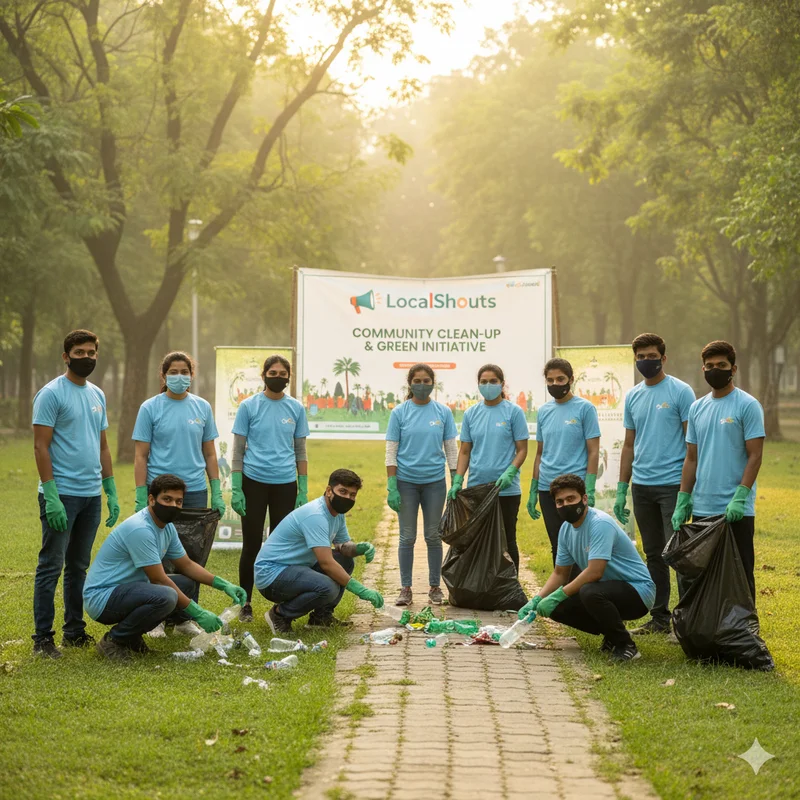
Organizing a clean-up drive serves to organize the removal of waste, but also instills conscious living, educates residents about their environmental responsibility, sets an example for others, and inspires unity amongst residents. It does not matter if it is a beach, park, riverbank, market place or street in the neighbourhood; a clean-up drive does have the ability to change the outlook and regard residents may have for their space.
This action guide will take you through everything you may need to start a community clean-up drive, from planning, permissions, participation, and promotion, you will also hear about projects like LocalShouts (https://www.localshouts.com) that will get you more participants and support for your clean-up drive.
1. Determine the Purpose and Location
Before preparing for your drive, you should consider the purpose and site.
Ask:
- What is the issue — is it plastic waste, dumping, lack of awareness, or areas neglected?
- Where would this location have the most impact?
- Who will be volunteering — are they community members, students, or business owners?
Some examples of potential locations to look at are:
- Parks or playgrounds that are littered
- Lakes, rivers, and beaches where pollution is an issue
- Roadsides, market areas, or places where people congregate
- School or college campuses
Once you decide on the location, you should walk there in advance and determine the following:
- The size of the area or site
- The amount of waste present and type of waste
- Access to parking, water, and restroom facilities
- Any potential safety concerns
A better understanding of the area will allow you to plan for necessary tools, volunteer support, and logistics.
2. Build a Core Organizing Team
You’ll need a group of dedicated people to share responsibilities. A small but committed team ensures your event runs smoothly.
Suggested roles:
- Coordinator: Overall management, timeline, and communication
- Volunteer Manager: Recruitment, training, and coordination
- Logistics Lead: Tools, transportation, and waste disposal
- Partnership Coordinator: Liaising with local authorities and sponsors
- Promotion Manager: Event marketing on social media and LocalShouts
Meet regularly, assign clear roles, and keep track of progress through WhatsApp or Google Sheets. Even a small team of 5–10 people can successfully run a neighborhood drive.
3. Request Permissions and Work with Local Authorities
Because public sites often fall under the jurisdiction of a municipal or panchayat, it's important to inform or request permission from:
- Municipal Corporation / City Council
- Local Ward Office / RWA (Resident Welfare Association)
- Police Station (for clean-up on public roads)
In your request, mention:
- The intended goal (what you will do), as well as the exact location (prefix with point or area).
- The date and length of time of the event.
- Number of people you expect to take part.
- How you plan to dispose of the waste.
By seeking permission from local authorities, you may be able to obtain official waste collection trucks, safety materials, or even media support!
4. Date, Timing and Scale - Think it and Plan!
- Action: It is possible to volunteer service time on a weekend - an early Sunday morning is typically convenient, as there will be light traffic and the least interruption while people are still available. Avoid weekends with festivals and days of extreme weather.
- Timing: Keep the clean-up drive short. Efficient, action-oriented, but never tiring for more than 2-4+ hours is reasonable length with rational work.
- Scale: Easy does it! You want to start small. Clean one area at first versus attempting to clean a whole town all at once, then grow it as a collective venture.
5. Arrange the Required Tools and Safety Gear
Cleaning may look simple, but it requires proper equipment to ensure efficiency and safety.
Essentials:
- Gloves (disposable or reusable)
- Masks
- Garbage bags (biodegradable if possible)
- Rakes, brooms, or litter pickers
- Shovels and dustpans
- Buckets or trolleys for moving waste
- Hand sanitizers and first aid kits
- Water bottles and refreshments for volunteers
If possible, source eco-friendly cleaning materials. You can approach local hardware stores or NGOs for sponsorship or donations.
6. Partner with Local Businesses and NGOs
Local collaboration amplifies impact. Small businesses, cafés, and shops often want to support such initiatives to build goodwill and visibility.
Ask for:
- Donations (cleaning supplies, snacks, water)
- Printing sponsorships for banners or T-shirts
- Waste collection help from recycling units
- Promotion support on their social media
Collaborate with local NGOs or environmental groups for guidance and manpower. Mention their support in your LocalShouts (https://www.localshouts.com) event listing to give them recognition.
7. Use LocalShouts to Promote the Event
Promotion is key to getting participants. Listing your event on LocalShouts (https://www.localshouts.com) ensures people in your city discover your clean-up drive easily.
Include:
- Event title and purpose (e.g., “Clean Our City Park Drive”)
- Date, time, and meeting point
- What to bring and wear
- Safety measures
- Photos or videos of the location
- The impact you aim to achieve
Once published, share your LocalShouts event link on WhatsApp, Instagram, and Facebook groups to attract local volunteers. The platform is especially helpful for small community initiatives looking for visibility without huge advertising costs.
8. Use Social Media to Get the Word Out
Social media is a very effective method of awareness and recruitment.
a. Create a Campaign Hashtag: You can create a hashtag like #CleanUpYourCity or #GreenYourStreet to connect your event to a larger movement.
b. Post Regular Updates: Posting before and after pictures of the target area, behind-the-scenes photos or videos, and countdowns is a great way to engage people.
c. Tag Partners and Volunteers: Getting partners or volunteers to share the post gives you a larger reach by engaging with their networks.
d. Tap Into Local Communities: Utilize local community pages (ex: “YourCity Volunteers”, “Environmental Action” or “Residents of XYZ Colony”) and share your LocalShouts link.
9. Inform and Engage your Participants
Before the drive begins, spend a few minutes orientating volunteers:
- Provide the rationale and intended outcome.
- Practice safe handling of materials.
- Sort items into biodegradable and non-biodegradable categories.
- Encourage team and community spirit.
- Have a brief warm-up, or group cheer before you begin to energize your participants.
10. Execute the Drive Smoothly
On the day of the event, coordination is key.
Checklist for Smooth Execution:
- Set up a registration counter for participant sign-in.
- Distribute gloves, bags, and safety gear.
- Assign volunteers to small teams (5–10 people per section).
- Ensure waste segregation at source.
- Arrange for a municipal vehicle or pickup truck for collected waste.
- Keep water and first aid handy.
Have photographers or volunteers take photos and videos during the event — these will be valuable for future promotions and updates on LocalShouts.
11. Dispose of Waste in an Eco-friendly Manner
The most important aspect of any clean-up event is waste disposal.
Separate waste into the following streams:
- Recyclable waste: plastics, glass, metals
- Organic waste: leaves, any biodegradable material
- Hazardous waste: medical or chemical items (be careful)
Contact the following organizations for proper waste disposal:
- Municipal waste management authorities
- Local recycling centers
- NGOs such as partners of the Swachh Bharat Mission or Waste Warriors
Check that nothing is still on the site and leave the site cleaner than when you arrived.
12. Recognize Volunteers and Celebrate Outcomes
When the clean-up is complete, gather all the participants for a brief wrap-up session.
- Thank them for their contributions.
- Take a group photo to remember the event.
- Show a before and after comparison.
- Announce a follow-up clean up, if one exists.
Recognize their participation with a certificate of recognition or a small gift of appreciation. This cultivates loyalty and your intention to get people involved in the future.
Post on LocalShouts (https://www.localshouts.com) as well as social media — highlighting outcomes encourages others to participate next time.
13. Track and Share Results
Measure success through:
- Amount of waste collected (in kilograms or bags)
- Number of volunteers involved
- Duration of the clean-up
- Visible change in the area
Share these metrics publicly. Numbers make impact real and attract more support for future drives.
Use your LocalShouts profile to upload post-event photos, statistics, and thank-you notes. The more transparent you are, the more people will trust and support your future events.
14. Keep the Momentum Going
A one-time clean-up is good, but a consistent effort creates real change.
Here’s how to sustain momentum:
- Plan monthly or quarterly drives.
- Encourage volunteers to adopt specific zones or streets.
- Conduct awareness workshops in schools or housing societies.
- Partner with RWAs for continuous maintenance.
Use LocalShouts to post recurring clean-up events and updates so your community knows you’re active year-round.
15. Combine Awareness with Action
Beyond cleaning, use the event to raise awareness about responsible waste habits.
Ideas include:
- Workshops on segregation and composting
- Poster-making contests for children
- Pledge walls where people commit to reducing plastic use
- Talks by environmental activists
This helps turn a single event into a movement — inspiring behavior change that lasts beyond the clean-up.
16. Ensure Safety and Inclusivity
A community clean-up should be open, welcoming, and safe for everyone.
- Involve families, seniors, and children with age-appropriate roles.
- Provide protective gear for all.
- Avoid dangerous zones (like sharp debris or polluted water).
- Have a first-aid point with trained volunteers.
A safe and inclusive event reflects true community strength.
Conclusion
Organizing a community clean-up drive is one of the simplest yet most powerful ways to bring people together for good. It requires planning, teamwork, and local collaboration — not large budgets or professional management.
With platforms like LocalShouts (https://www.localshouts.com), you can reach volunteers, spread awareness, and showcase your initiative to a wider audience. Every clean-up, no matter how small, inspires others and sets an example for the next generation.
Remember: small steps lead to cleaner cities, greener environments, and stronger communities. So, pick a location, rally your neighbors, and start your clean-up drive today — because change begins with us.
FAQs
1. Do I need permission to organize a clean-up drive?
Yes, for public spaces like parks or roads, it’s best to inform the local municipality or RWA to ensure safety and proper waste collection.
2. How do I find volunteers for a clean-up drive?
Promote your event on LocalShouts, social media, and local WhatsApp groups. Partner with schools, NGOs, or resident associations to gather support.
3. What should volunteers bring to a clean-up drive?
Gloves, masks, water bottles, and comfortable clothes. Organizers usually provide garbage bags and tools.
4. How do I handle the waste collected?
Coordinate with the city’s waste management department or recycling centers for proper disposal and segregation.
5. How can small businesses contribute to clean-up drives?
They can sponsor materials, refreshments, or promotion. Featuring their support on LocalShouts gives them community visibility.
6. Can clean-up drives really make a difference?
Absolutely. They not only improve local hygiene and aesthetics but also foster environmental awareness and civic responsibility among citizens.


